Themed ‘Pedagogy on the Move: Our Journeys’; the joint event was hosted by PASGR and its partners in the Pedagogical Leadership in Africa project as well as the collaborative Master of Research and Public Policy (MRPP) programme. It was held at the Sarova Whitesands Hotel, Mombasa, Kenya on June 24 – 28, 2019 and marked by a series of activities: from a one day conference with a watershed keynote address; to two days of documenting and sharing pedagogical journeys; and, a standalone Trainer of Trainers’ programme for resource persons.
It was an opportunity for an estimated 170 participants to interact and exchange perspectives on emerging outcomes of pedagogical innovations. These included: government officials, education policy actors drawn from various national and regional organizations; university leaders and managers; research organizations; university teaching staff and students; the media; resource persons; and, PASGR staff.
Pivotal in the event were teaching staff who have been trained in PedaL pedagogy and translated the newly acquired skills into practice over a period of one year. The teachers shared their experiences as well as lessons learnt. The objective was to inspire exchanges; promote opportunities for leveraging, adapting, testing, and sharing available resources, knowledge, and technology to enhance and broaden best practices in teaching and learning in African universities.
Author: Elijah Kabari
Kwesi Acquah Sam, the host of AAU Talks, engages Dr. Beatrice Muganda, Director of Higher Education at the Partnerships for African Social and Governance Research (PASGR) based in Nairobi, Kenya on the Pedagogical Leadership Programme run by PASGR and its impact on transforming teaching and learning processes in Africa.
African universities need to “run faster in innovating technologies to compete globally”, according to Professor Crispus Kiamba, former permanent secretary in the Ministry of Higher Education, Science and Technology in Kenya and current faculty member of the School of the Built Environment, College of Architecture and Engineering at the University of Nairobi.
In his keynote address to the annual convention of the Partnership for Pedagogical Leadership in Africa (PedaL) held in Mombasa last month, Kiamba said: “In the past, slavery was based on race and colour. In the future, slavery will be based on technology … African universities need to run faster in innovating technologies to compete globally.”
Kiamba said innovations are needed to meet the needs of the modern student who expects that higher education will “mirror the information accessibility and immediacy of their connected lives”. He said students today demand that higher education meets their need for jobs and are thus considering options outside the traditional undergraduate and postgraduate studies.
The convention, that took place in Mombasa, Kenya from 24-28 June, was convened by the Nairobi-headquartered Partnership for African Social and Governance Research (PASGR), which is leading several partners to roll out PedaL, a formal partnership of eight institutions that aims to promote change in teaching and learning practices and to maximise learning outcomes in graduate social science programmes.
PedaL is one of nine partnerships supported by the Strategic Partnerships for Higher Education Innovation and Reform.
Since the launch of PedaL a year ago, several universities across Africa have joined the partnership. These include Egerton, Maseno and the University of Nairobi in Kenya, University of Ibadan in Nigeria, University of Ghana, University of Dar es Salaam and Mzumbe University in Tanzania, Uganda’s Martyrs University, University of Sierra Leone and the University of Botswana.
Technological innovations
Kiamba challenged over 200 academics from African universities attending the gathering to use technological innovations to bring systematic change to teaching and learning at their institutions. He said innovation in higher education should be anchored on problem-solving and creativity that improve the outcomes of education, and this will make universities attractive to key stakeholders: students.
Kiamba highlighted the good work being done by Kenyan hardware accelerator venture Gearbox that allows engineers and people with no formal training in engineering to innovate around hardware. The space also gives university students an opportunity to access facilities and equipment not easily found locally, to apply practically what they learn in class, and turn their ideas into products.
Government support
However, Kiamba, who is also a former vice-chancellor of the University of Nairobi, challenged African governments to support universities in their research for innovation quest. “Governments have a duty to support such ideas as Gearbox that are a game-changer for startups.”
He said the government support should come in the form of favourable policy environments in which universities could work, and financial support – especially for research. Investments by African governments in research programmes at universities make those institutions sustainable, said Kiamba, citing the PASET Regional Scholarship and Innovation Fund through which governments such as Kenya and Senegal have invested funds to support research in science and technology.
Professor Tade Aina, executive director of PASGR, said that university academics, especially teaching staff unions, have a particular duty to raise awareness. “We need to make governments understand the implications of not acting to support universities financially,” said Aina.
The role of staff unions
He said staff unions should lead by drafting strong proposals and taking them to governments for funding instead of simply protesting. “University teaching staff unions are a big holdup to the transformation of higher education in Africa as they are not meeting expectations,” said Aina.
During his tenure as the permanent secretary in the Ministry of Higher Education, Kiamba said that he took a proposal to parliamentarians and convinced them to support the increase of budgetary allocations for research to 2% of the country’s GDP. “Today, it is now a law in Kenya,” he said, commending the country for gradually increasing budgetary allocations for research, currently sitting at 0.8% of GDP, which is close to the African Union’s recommendation of 1%.
Kiamba called for deliberate efforts to get African universities to support pedagogy, not only in social sciences but also in science, technology, engineering, and mathematics.
“Pedagogy is a systematic thing that is very important especially for lecturers to teach students,” said Beatrice Muganda, the director of higher education at PASGR.
According to Muganda, PASGR is currently working in collaboration with the Alliance for Research Universities in Africa (ARUA), the University of Sussex’s Institute of Development Studies and five universities to develop and roll out PedaL in graduate social science programmes.
Training for teaching staff
Professor Bonaventure Rutinwa, the deputy vice-chancellor for academics at the University of Dar es Salaam, said massification of higher education should mean an increase not only in the number of students but also in qualified teaching staff.
In an interview with University World News, Rutinwa said student enrolment increases had placed pressure on the system of mentorship his university had adopted whereby senior staff could guide junior staff. “We had many people coming into academia to teach but the experienced academics available to coach and mentor were few.”
Through the PedaL-PASGR initiative, he said, his university has benefited especially with the use of e-resources and the development of curricula. “This is timely because teaching methods change all the time. When I was doing law in the 1980s at the University of Oxford, there were no lectures; it was a tutorial system, going to the office of the lecturer and getting tutored because we were few,” said Rutinwa.
This year, he said, the University of Dar es Salaam had decided that “each and every member of the teaching staff” would undergo pedagogical training. Additionally, teaching staff will be assessed and promoted on the basis of publications and their teaching would be assessed according to set criteria.
This has been re-posted from https://www.universityworldnews.com/post.php?story=20190712091742200
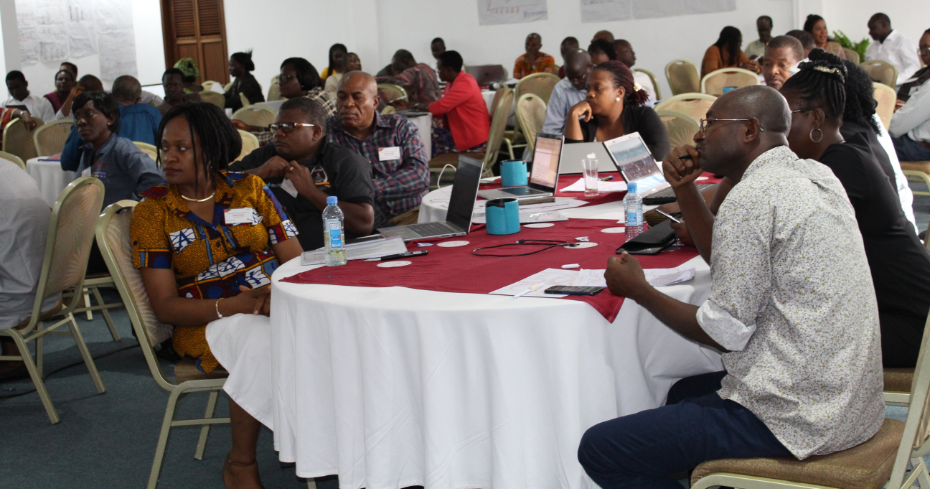
170 participants from the 21 universities across Africa were in attendance at the Pedagogical Leadership Annual Convening and Collaborative Master of Research and Public Policy week organized by the Partnership for African Social and Governance Research (PASGR) and supported by the UK Department For International Department (DFID) under the Strategic Partnerships for Higher Education Innovation and Reform (SPHEIR), held at the Sarova Whitesands Hotel, Mombasa, Kenya.
Professor Tade Akin Aina, the Executive Director, PASGR, said that an investment in knowledge pays the best interest. “The world is at the verge of its fourth revolution thus the need for producing innovative and critical thinkers of knowledge at our universities,” he added during his opening remarks at the event.
He urged the participants drawn from the 21 universities in Africa to embrace technology and innovations both in learning and teaching. This will ensure that students learn more interactively and effectively.
The convening dubbed “Pedagogy on the move: Our Journeys” was a channel for university teaching staff to share experiences, stories, consult peers, validate and track growth made in transforming the PedaL training into pedagogical innovations in their classrooms.
Dr. Muganda, Director- Higher Education Programme at PASGR said that pedagogy must be oriented not to the yesterday but to the tomorrow. Only then can it call life into future development. “We have trained over 650 teaching staff in 30 participating universities,” she added.
The MRPP Week was purposefully planned to correspond with the PedaL annual convening to consolidate gains made in innovating in delivery of the signature programme and also for the MRPP to celebrate landmark achievements following the four years of implementation in 13 universities in seven African countries.
Also in attendance was Prof Kiamba, Former Permanent Secretary, Ministry of Education. He gave a keynote lecture on ‘Innovation in Higher Education: Prospects for African Universities’. He said, “There is the need to embrace technologies associated with innovation.” By doing so, it will equip lecturers to be more effective in teaching and producing students that are innovative oriented to face the fourth industrial and future revolutions.
During the presentations of their experiences, one of the lecturers said, “I was not a fan of technology. I am a fan of pedagogy, of understanding how people learn and the most effective learning methods. But technology enables some exciting changes. PedaL has made classrooms to be more interactive and lively. I am born again.”
This caucus brought together 21 universities namely: University of Ibadan, Uganda Martyr’s University, University of Dar es Salaam, Egerton University, University of Ghana, University of Nairobi, University of Sierra Leone, University of Jos, University of Pretoria, University of Ilorin, Maseno University, Makerere University, University of Nigeria, Nsukka, Uganda Christian University, University of Lagos, University of Botswana, Association of African Universities, Azumbe University, Strathmore University, Technical University of Kenya and Moi University.
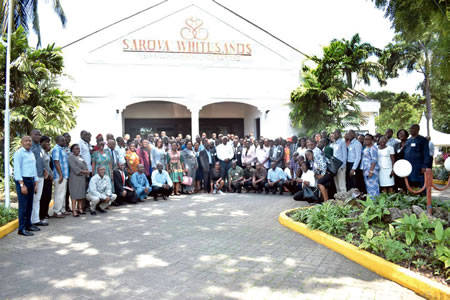
The Executive Director of Partnership for African Social and Governance Research (PASGR), Nairobi Kenya, Professor Tade Akin Aina, says the world is entering into a knowledge economy that is evidence-based, developed and generated through protocols and processes either in the humanities, sciences or technology.
He stated this on Monday in his opening remarks at the opening of the maiden edition of Pedagogical Leadership in Africa (PedaL) Annual Convening and Collaborative Master of Research and Public Policy (MRPP) Week organised by PASGR and supported by the UK Department For International Department (DFID) under the Strategic Partnerships for Higher Education Innovation and Reform (SPHEIR), held at the Sarova Whitesands Hotel, Mombasa, Kenya.
While noting that the world is at the verge of the fourth industrial revolution, Professor Aina emphasised the need for legitimate producers of knowledge to be adequately equipped and look into correction mechanisms, especially at the university level, in order to be able to fit into the revolution.
He charged the facilitators drawn from 21 universities in Africa at the event to embrace innovations in teaching and learning, saying that “for students to learn effectively, they must have exceptional and memorable moments. They need an array of different ways of learning and teaching and an assortment of variety, which include e-cases, role playing, role acting, dialogue, group work and so forth.”
Speaking on the rationale of the joint annual convening, the director, Higher Education Programme, PASGR and PedaL’s team leader, Dr Beatrice Muganda, said it was an avenue for university teaching staff to share experiences, impact stories, consult peers, validate and track progress made in translating the PedaL training into pedagogical innovations in their classrooms.
At the end of the week-long event, she said participants would showcase their achievements, prospects, and challenges through e-portfolios and reflect on their individual pedagogical journeys.
Mrs. Muganda added that the MRPP Week was deliberately planned to coincide with the PedaL annual convening to consolidate gains made in innovating in delivery of the signature programme and also for the MRPP to celebrate landmark achievements following the four years of implementation in 13 universities in seven African countries.
“The joint events will share programme outcomes with government officials, university leaders; policy actors from education and research communities; the media; development partners; and university teaching staff and students across the continent. The aim is to secure broad-based ownership and build momentum for replication of the innovations towards creating greater impact,” Dr. Muganda said.
Former Permanent Secretary, Ministry of Higher Education, Professor Crispus Kiamba, while delivering the keynote lecture on the topic: ‘Innovation in Higher Education: Prospects for African Universities’ said in order for African universities to educate learners for the fourth and future industrial revolutions, there is the need to embrace technologies associated with them.
He said there is also the need to make education systems, programmes and curricula flexible, allowing for students’ interests and needs, while teachers, who are primary facilitators of learning, should also be continuously learning so they can acquire the necessary skills and competencies.
Professor Bonaventure Rutinwa, deputy vice-chancellor, University of Dar es Salaam, Tanzania; and Dr Ezekiel Adeyi from the University of Jos, who spoke with the Tribune Education on the impact of PedaL to tertiary education described what PedaL is doing as a total departure from the conventional way of training teachers on new content delivery methods.
Professor Natasja Holtzhausen from the University of Pretoria, South Africa, in her remark said “apart from the opportunities PedaL brings to students, those who benefit the most are the lecturers because they are equipped with the much-needed skills. Each time I work with PASGR, I learn something new.”
According to Joseph Ogana, a year two student of Master of Research and Public Policy (MRPP) from University of Dar es Salaam, Tanzania, “the conference is a very good platform for both students and lecturers of MRPP and also policy makers because, it brings these three main important stakeholders together on one platform through which they share experiences and how they can work together as partners.
A total of 170 participants drawn from the 21 universities across Africa are in attendance at the ongoing conference.
The 21 African universities are; University of Ibadan, Uganda Martyr’s University, University of Dar es Salaam, Egerton University, University of Ghana, University of Nairobi, University of Sierra Leone, University of Jos, University of Pretoria, University of IIorin, Maseno University, Makerere University, University of Nigeria, Nsukka, Uganda Christian University, University of Lagos, University of Botswana, Association of African Universities, Azumbe University, Strathmore University, Technical University of Kenya and Moi University.
This has been reposted from https://tribuneonlineng.com/221830/
Title: Programme Officer, Research
Location: Nairobi, Kenya
Open to: Kenyan nationals only
Duration: 2 years, renewable
Application deadline: Friday, July 19, 2019
Background
The Partnership for African Social and Governance Research (PASGR) is an independent, non-partisan pan-African not-for-profit organisation established in 2011 and located in Nairobi, Kenya. PASGR works to enhance research excellence in governance and public policy that contributes to the overall well-being of all. PASGR is recruiting for a role within its Research and Policy Unit to support research and evidence uptake programmatic work across the continent.
The right candidate for this programme officer position will be able to take initiative in connecting, informing and fostering exchange among relevant research, policy practice and advocacy constituencies working on selected issues of governance in Africa; in identifying and engaging funding and partnership opportunities for the research unit, coordinating communication arrangements for the research unit operation in the region. The candidate will develop and grow work along six key areas of responsibilities:
- Project coordination
- Substantive knowledge of public policy, development and governance theories and practices
- Technical support
- Capacity building
- Research and documentation
- Monitoring and evaluation
S/he will be comfortable with tight deadlines, and adept in setting relevant priorities and working in a self-directed and proactive manner, while knowing when and where to support where needed.
Role Profile
Summary of Key Responsibilities:
- Support the development and implementation of PASGR’s flagship research uptake and use programme – Utafiti Sera – initiatives at regional and national levels
- Support the overall institutional and research programme plans, including resource mobilization for programme sustainability
- Participate in the development of plans and mobilization of resources for further policy strengthening initiatives at regional or national levels
- Establish and maintain a comprehensive database of institutions and individuals actively engaged in research, research uptake, advocacy, and practice in Africa
- Coordinate and support the management of PASGR Research Unit’s internal and external communication with relevant actors, stakeholders and the public
- Provide managerial and technical support to the head of research and policy
- Participate in strengthening existing M&E systems at all levels of the programme including supporting research programme grant recipients and Sub-recipients to meet programme deadlines and deliverables
- Participate in documentation and dissemination of new lessons and experiences and in the implementation of research projects/studies
- Participate in relevant PASGR activities, as needed.
Competencies
- Master’s degree in the social sciences, development, governance or related fields. Candidates who are either completing PhD or those who have obtained a PhD within the past two years are encouraged. Working knowledge of French will be an added advantage.
- At least three (3) years of post-qualification work experience in the field of social science including engagement with policy, practice and government constituencies
- Experience of managing projects, events and stakeholder engagement including budgets and budget tools
- Excellent writing and oral communication skills
- Familiarity with the development of concepts for research or other projects and with the search for- and engagement of funding opportunities
- Evidence of willingness to work as part of a team
- Proven ability to multitask and work in a self-directed and self-driven proactive manner without supervision
- Proven ability to actively reach out to and forge strategic connections and partnerships with a spectrum of stakeholders
Salary
This position attracts a competitive package that includes: basic salary, dependent education, pension plan and medical insurance.
Application process
Applications must be submitted electronically via email to PASGR (recruitment@pasgr.org) by Friday, July 19, 2019 at 1700hrs. Canvassing will lead to disqualification.
All applications must contain:
- Application letter stating why you are best suited for this role
- Curriculum Vitae with a list of 3 references
- Sample publication
PASGR is an Equal Opportunity Employer.
1. Background
The public policy domain in Africa is shifting at a rapid pace moving towards inclusivity, democratization and the integration of gender as a significant component of equitable and inclusive public policies. At the Partnership for African Social and Governance Research (PASGR), the significance of gender in the studying, understanding and making of public policy has been recognized as indisputable and therefore integrated into all our programs and institutional formation.
PASGR intends to include more gender-based courses in its training including one on gendering the public policy process. A one-day forum that convened experts, activists, policy actors and researchers on gender was organized by PASGR in May 2019. The forum examined and explored the various dimensions and issues involved in the development of a training module to “engender the policy process”. The convening also made the connections between the changing nature of governance and key notions and practices embedded in state-citizen relations and their implications for evolving gender and politics; and gender and policy discourses.
This call is for expert(s) and academic(s) with the interest, commitment, expertise and capacity to design and develop a high quality stand-alone module on “gendering the policy process in Africa.”
PASGR is an independent, nonpartisan, pan-African not-for-profit organisation established in 2011 and located in Nairobi, Kenya. Currently engaged in more than 26 African countries, PASGR works to enhance research excellence in governance and public policy that contributes to the overall wellbeing of citizens. In partnership with individual academics and researchers, higher education institutions, research think tanks, civil society organisations, as well as business and policy communities both in the region and internationally, PASGR supports the production and dissemination of policy relevant research; designs and delivers suites of short professional development courses for researchers and policy actors; and facilitates the development of collaborative higher education programmes. Our vision is ‘a vibrant African social science community addressing the continent’s public policy issues’.
2. Purpose of the assignment
The purpose of this assignment is to develop a short course on gender and public policy in Africa. The title of the course is “Gender and Public Policy Transformation in Africa: Understanding and Practice”. The focus of the course will be to contribute to the understanding and practice of the public policy process in Africa through a more dynamic and organic integration of gender in the narrative as well as the practice.
The course among others is expected to cover some of the following elements:
- An- Introduction: that provides rationale, brief analytical overview and conceptual clarification utilizing Gender analysis as a running thread/theme
- A brief overview of relevant theoretical perspectives
- An exploration of the implications and importance of voice & agency in the policy process
- An exploration of concrete practices in selected thematic areas to provide context and substance for conceptual and theoretical content.
3. Scope of work
The assignment will entail designing and developing of the short course structured around key elements stated above. There will be a requirement to consider and use PASGR’s innovations in pedagogy that blend face-to-face delivery made up of a variety of learning approaches and platforms with online delivery. It is expected that the course will utilize both the blended approach and stand-alone face to face delivery covering no more than four days.
Specific tasks will include the following:
- Develop a course on gender and public policy that:
- addresses the understanding and practice of the gendering public policy process;
- contains intrinsic gender engaged and gender transformative content, process and objectives;
- addresses needs of the target audience (predominantly policy actors and policy practitioners);
- concretely demonstrates how gender inclusivity is effectively integrated in, or can help reform specific policy processes;
- demonstrates alignment in content, delivery methods and learning outcomes;
- Identify and develop learning resources/material for the course.
- Engage and endeavour to link the course delivery with appropriate pedagogical strategies currently in use by PASGR.
- Design innovative assessment tools.
4. Request for expressions of interest
PASGR invites expressions of interest (EOI) from individuals or teams with demonstrated expertise and experience in:
- Gender and public policy analysis/Gender and Governance
- Teaching and facilitation at higher education or advanced learning levels
- Module development and writing.
Interested persons who meet the specification are invited to complete and submit the following:
- A Technical Proposal answering to the TORs (not exceeding 5 pages). This should cover the approach to work, detailed course outline, and work plan with indicative time frame.
- A Financial Proposal;
- A brief description of recent experience in similar assignments;
- A current writing sample on the subject or current course description and brief curriculum if they have developed a similar course
- CV (2 pages highlighting relevant experience)
All applications should be sent to PASGR info@pasgr.org by July 15th, 2019. Quote “EOI- Gendering Policy Process Course Development” in the subject line of your email.

The Partnership for African Social and Governance Research (PASGR) is an independent, non-partisan pan-African not-for-profit organisation established in 2011 and located in Nairobi, Kenya. Currently engaged in more than 12 African countries, PASGR works to enhance research excellence in governance and public policy that contributes to the overall wellbeing of women and men.
PASGR invites interested and eligible firms to submit their applications to be enlisted as pre-qualified suppliers for the financial years 2019 – 2021. Previously prequalified suppliers are required to reapply to confirm competitiveness and continued compliance with the prequalification criteria.
Interested eligible firms can obtain further information from the prescribed pre-qualification documents with detailed information from here or from our offices at 6th Floor, I&M Bank House, 2nd Ngong Avenue, Upper Hill, during working hours. A non-refundable fee of KES 3,000/- for each pre-qualification category application shall apply. Deposits should be made in the following account and the deposit slip attached to the tender document upon submission.
Partnership for African Social and Governance Research
Account No: 8018540018
Commercial Bank of Africa, Upper Hill Branch
Duly completed pre-qualification documents in plain sealed envelopes, clearly marked with category number and category description bearing no other mark should be addressed and sent or dropped to;
The Tender Committee
Partnership for African Social and Governance Research (PASGR)
6th Floor, I&M Bank House, 2nd Ngong Avenue, Upper Hill
P.O Box 76418-00508
Tel: +254 (0)20 2985000 /(0)729 111031 /(0)731 000065
Nairobi
So as to be received on or before 12.00 noon on Friday 21st June 2019. The Management shall have the right to accept or reject any application without giving reasons for its decisions.
The Executive director of the Partnership for African Social and Governance Research (PASGR), Professor Tade Aina, and the director of Higher Education as well as team leader for Pedagogical Leadership in Africa (PedaL), Dr Beatrice Muganda, recently led a team of 59 resource persons from different parts of the world to Nigeria to deliver a training workshop in pedagogy at the University of Ibadan. Dr. Muganda speaks to MODUPE GEORGE, who caught up with her at the event on the activities of PASGR and the systemic change PedaL is catalysing in teaching and learning in African universities and other issues in education.
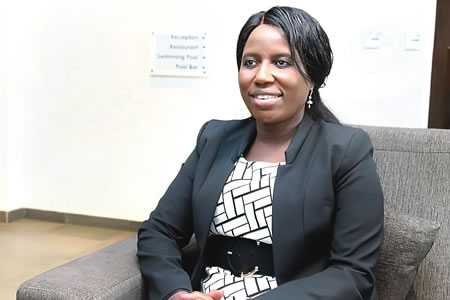
Director of Higher Education Programme at the Partnership for Social and Governance Research (PASGR)
PASGR is an independent, non-partisan pan African non-governmental organisation that was established nine years ago in Nairobi, Kenya. We work with intricately with academics and researchers, higher education institutions, research think tanks, civil society organisations, business and policy communities both in the region and internationally to enhance research excellence for public policy. We also offer training in pedagogy and research methods. Like now, I’m around for a training in pedagogy at the University of Ibadan (UI) through an initiative known as Pedagogical Leadership in Africa (PedaL). Basically, PASGR has three programmes. The first programme is research. Here, we work with researchers to produce evidence that involves public policy. We hold forums based on the Utafiti Sera (a Swahili word for research policy community) model. Through this platform, we bring a multitude of stakeholders together to discuss research evidence from fresh undertakings or synthesis of existing research. We have achieved a lot ofsuccess in generating appropriate and negotiated policy actions and uptake, for example, underemployment creation in agriculture and agribusiness as well as action for empowerment and accountability in Nigeria; in turning urban cities around in Rwanda; and, in social protection in Kenya. The second programme is professional development and training. This one offers research methods training to tool and retool researchers. So far we have trained 1600 researchers, some are very fresh in the field such as doctorate candidates while others are more experienced but need to renew their skills or broaden exposure to mixed methods. The third programme is the higher education programme which I direct.
Tell us more about the higher education programme of PASGR?
Here, we do a number of things. We mainly collaborate with universities to enhance the quality of education and training in different forms. We rolled out the collaborative Master of Research and Public Policy (MRPP) programme in 2014. The programme was jointly designed by 13 universities in seven African countries and it is being offered in these universities:In Nigeria -University of Jos, University of Ibadan and University of Lagos; University of Serria Leone; University of Ghana; University of Dar es Salaam and Mzumbe in Tanzania; Uganda Martyrs University and Uganda Christian University in Uganda; University of Nairobi, Maseno and Egerton University in Kenya; and, University of Botswana. These universities came together, discussed and agreed on issues, tools, and practices that could be integrated into a programme of public policy and taught to student in a broadly similar way across the continent. So, it is the same programme, awarded by each university and we at PASGR provide intellectual and strategic guidance in programme development; facilitate the network to share ideas, resources and expertise. We also link our local partners to international knowledge, technology, and research networks. So far, we have graduated four cohorts and we will be launching a collaborative Doctoral programme in Public Policy from September 2019 in distinctive hubs.
PASGR works with resource persons from within the continent and beyond in all its programmes. We have drawn on global perspectives, expertise, and innovations from: University of Minnesota (US); The Open University (UK); IDS, University of Sussex (UK); Queens University (Canada); Hertie School of Governance and Free University Berlin, Global Public Policy Network (GPPN) and Global Business Schools Network (GBSN) among others. All through, our vision remains clear: to create a reasonable pool of resource persons within the continent and in each of the participating universities. We are getting there and remain confident that the capacity embedded in each university will offer PedaL trainings to colleagues on a sustainable basis with very little support from outside. We have grown the resource pool gradually by spotting and nurturing talent in each of the PedaL trainings people who are excited, curious and highly motivated and with an innate capacity to deliver. They are identified; mentored, given an opportunity to co-teach with more experienced teaching staff, and thereafter assigned a leadership role.
Why the need for pedagogical leadership in teaching at the university level?
First of all, we need to professionalise teaching at universities. The norm has been to recruit academics with mastery of disciplinary content in Physics, Political Science or whatever other disciplines at a Master’s or doctorate level to teach at the university. Yes, they are good in their contents, but they are not really conversant with the art of teaching and learning which must be acquired and constantly practised. Teaching and learning have their own contents, skills, and competencies, bolts and nuts, so to say. In PedaL, university academics are provoked to question their own beliefs about teaching and learning based on teaching philosophy a well as theories of learning. They are invited to understand the learning needs of students and how to turn around to be more responsive to these needs so as to engender deep learning as opposed to mere regurgitation of facts by students. When learning is developed around a variety of activities, it becomes interesting and is more likely to retain students and curtail the high dropout rates that dog graduate programmes. Fourth, part of the reasons that we are getting graduates who are not properly grounded in their work and who are not adaptive to changing economic conditions is that most of the university teaching staffs dwell on passing on knowledge at the expense of helping students to develop the right attitudes and values as well as 21st century skills such as social consciousness, critical thinking, leadership, teamwork, adaption, problem-solving and creativity. I am glad that this gap is drawing the attention of stakeholders and bilateral organisations. DFID, World Bank and even the European Union have started investing money into programmes for developing the teaching capacities of university teaching staff.
Does your training in pedagogical leadership in any way enhance the curricula of the universities in which you have trained several cohorts?
As a matter of fact, PedaLtraining enriches curricula. For most teachers, what to teach (content) is at their fingertips. PedaL helps them to answer the question – how do I organise what I teach in the most interesting and memorable fashion? PedaL interventions in curricula will vary with context, discipline and even individual university norms. In the process of stretching their imagination, academics may explode some of the course descriptions into comprehensive course outlines. In other cases, they will refine the expected learning outcomes and design activities that lead to the attainment of these outcomes. What we are saying to teachers is, take a second look at your course, and as we work through it, address any conspicuous gaps with regard to linking theory to practice, bringing issues that affect people in their daily lives in your content, using case studies of women and marginalised groups to draw attention to their plight, creating opportunities for projects and other learning activities that stimulate critical thinking and also enable students to develop a range of skills such as communication and presentation. Our interventions are at the level of the course, and will organically enrich the curriculum. Ultimately PedaL influenced courses will not only help students to know a lot of things, but they will also develop the capacity to do a lot of things and to survive in the unpredictable knowledge economy.
It appears you only work with public universities; don’t you have plans to involve private institutions in your programmes since they are all working towards the same goal?
We started with five partner universities for purposes of managing the partnership effectively. However, the partnership provides many entry points into other universities in the host countries. Take ARUA for example, it has opened the door for 16 research-intensive universities to prioritise pedagogy taking cognisance of the fact that it takes good teaching and learning to produce effective researchers. So we are going through networks that we are already working with such as the Regional Universities Forum for Capacity Building in Agriculture to reach a critical number of universities on the continent. For PedaL, we want a systemic change, and the system includes the private, public, faith-based, small and big; we need to move forward together. Already, we are working with a number of private universities; Uganda Martyrs and Uganda Christian, The United State International University in Kenya, Kisubi, Africa Rural University of Uganda, and so forth. We are reaching out to other universities. However, to be able to do this, we need universities to put down some resources, to share the cost of the training. We can only reach the whole continent if we are able to mobilise domestic resources.
How has PedaL been bridging the gap between the older generation of teachers and the new when it comes to imparting pedagogical leadership training across nations?
We’ve had a lot of experience and positive vibes, especially when we started integrating technology into teaching and learning. When we started recording content videos, we were surprised that the more mature and experienced academics were eager to have their voices heard across the continent. Older cohorts of teaching staff are acknowledging the pedagogical transformation: “ I had never worked with technology, but now, I have created my website” said Nobert, an academic at the University of Nigeria. Given their rightful position and a valuable opportunity, the older academics are ready to work with us. The practice of co-teaching in most universities will also lead to rubbing of younger and older minds around innovations. We believe that when the older ones see the value of the transformation, they will come on board slowly. But also the push for accountability that may stem from students along the way. This will provide a powerful stimulus for transforming teaching and learning strategies. Then we have senior champions of the transformation complete with a strong voice and platform: if Emeritus Professor Pai Obanya can do it, who can’t?
How accessible are you to upcoming universities, which are in dire need of PedaL, but do not have the wherewithal? How do you intend to reach out to them?
In every PedaL training mounted, we invite a few participants from such ends. Besides, every hub training organised at a university provides an opportunity for solidifying PedaL in the host country as a number of other universities are invited to participate and special places are reserved for the smaller universities because we want to be inclusive and equitable. For instance, in Uganda, we were able to train six other universities, which were not part of the partnership. These included a small university, the Africa Rural University as well as another university from a post-conflict region, Gulu University. We care so much about the marginalised universities; we want them to get the right exposure. The next hub training is planned for Ghana in August 2019 and we will be replicating the same model.
This has been re-posted from: https://tribuneonlineng.com/216683/