African academics will need to embrace blended and online teaching in their quest to transform pedagogy so as to meet the expectations of students and enhance the quality of teaching and learning, according to experts and key African higher education stakeholders.

The community of educators and leaders are drawn from 29 public and private universities in 5 African countries: Kenya, Uganda, Tanzania, Ghana and Nigeria said that the future of higher education on the continent is fast changing with advancements in technology. They also noted that technology is central in the life of students today and that facilitating technology-enhanced learning would serve the interests of students.

They were speaking this week (8th February) during a live session of technology for transformative pedagogy in Africa training under the Partnership for Pedagogical Leadership in Africa (PedaL) initiative.

The training is the fifth of a series of PedaL’s online training programme that seeks to help university educators enrich their knowledge in the design of courses and how to utilize technologically driven learning management systems to enhance teaching and learning. PedaL training participants cover fundamental concepts and practical application of a variety of toolsets, digital resources and strategies for course planning and design as well as creative facilitation and innovative assessment. The initiative is implemented by Partnership for African Social Governance Research (PASGR) in partnership with African Research Universities Alliance, the UK’s Institute of Development Studies, the University of Sussex, Nigeria’s University of Ibadan, the University of Ghana, Uganda Martyrs University, Tanzania’s University of Dar es Salaam and Egerton University in Kenya with funding from the Strategic Partnerships for Higher Education Innovation and Reform (SPHEIR) programme. SPHEIR is managed on behalf of the UK Foreign, Commonwealth and Development Office by a consortium that includes PwC and Universities UK International.

“It is our responsibility to mould and bring out the best in our students. With PedaL, we are opening a world full of possibilities for transforming our teaching and learning strategies” said Dr. Beatrice Muganda, PASGR’s acting executive director as she gave her welcoming remarks.

Muganda who is also the director of higher education at PASGR said that the PedaL programme had already trained over 1400 academics in 70 universities spread across 10 African countries. She stressed that PedaL promotes co-creation of knowledge, and inclusivity, giving voice even to the marginalized in Africa’s higher education ecosystem to drive pedagogical transformation. “Unless pedagogical transformation happens to academics, it cannot happen to students. We need a holistic digital transformation of all processes in our institutions as this is the future of universities,” said Professor Robert Gateru, Vice-Chancellor of Riara University in Kenya.

Gateru who has undertaken the PedaL Online training himself, his Vice-Chancellor status notwithstanding, is a visionary leader. He challenged African academics to embrace blended and online teaching and learning as this will define the future of higher education globally.

“Majority of our students today prefer blended learning. We should go where learners are and give them what they want,” added Gateru.

Professor Jonathan Babalola, Provost, Postgraduate College at Nigeria’s University of Ibadan said that lauded PedaL training and urged university educators to focus learning on the competencies they expect the students to develop and demonstrate in the community and at work.

Egerton University’s deputy vice-chancellor academic affairs, Professor Alexander Kahi said that technological transformative pedagogy as advanced by PedaL will enhance the sustainability of higher education in Africa. He further applauded the efforts made by PedaL to support African universities to adopt innovative pedagogies. “This is a very important step we are making towards quality education for future generations”, stressed Professor Kahi.

“PedaL is extremely relevant to the context in which we work because it stimulates ownership with the conversation moving away from the facilitator to the participants. It also promotes peer learning through experiences shared,” said Prof. Betty Ezati, Dean School of Education, Makerere University, Uganda while sharing her the story of her compelling PedaL journey.

“The immediacy of the use of the content is profound; whatever you learn, you put it to use immediately. Coming out of the course, you have a reviewed course or created a new course ready to be delivered online,” she added.

Prof. Samuel Agyei-Mensah, Director, Centre for Teaching and Learning Innovation, University of Ghana, Ghana said that PedaL is an eye-opener due to its captivating innovative methods of teaching and learning. He added that; “PedaL programme managers at the University of Ghana and I were able to have a discuss and deliver a training programme that equips lecturers of the University of Ghana with innovative pedagogical skills aimed at enhancing student learning outcomes”.

Inspired by PedaL the University of Ghana established the Centre for Teaching and Learning Innovation in 2020. The Center is supported by funding from The Carnegie Mellon Foundation.

Prof. Labode Popoola, Vice-Chancellor, Osun State University, Nigeria observed that; “PedaL is proof to the limitless possibilities of human creativity. It is a programme that has brought lecturers from different institutions in different countries together to bring a breath of fresh air in an area that has been neglected for a long time. It is an opportunity to be relevant and one should not miss it!” He noted that the Osun State University was pleased to be a legitimate member of the PedaL partnership.

The opening ceremony marked the fifth series of PedaL Online training and another significant landmark in the landscape of pedagogical transformation on the continent. As the year unfolds, the growth and impact of PedaL will be closely watched.

Hundreds of academics at 28 universities across the African continent are facing online teaching and learning in 2021 head-on, thanks to a training initiative preparing them for the challenges of the year ahead.

When COVID-19 hit the world in 2020, higher education in many African universities was in chaos. Some institutions closed, and others were not adequately prepared to shift the delivery of their programmes to the virtual space.

Besides infrastructural challenges, many university teaching staff lacked digital competencies to facilitate teaching and learning online.

This was exacerbated by a predominantly poor attitude towards online programmes which are perceived as inferior to face-to-face programmes.

To combat the problem and prepare teachers for the ‘new normal’, the Partnership for African Social Governance Research (PASGR) in Nairobi, through its Partnership for Pedagogical Leadership in Africa (PedaL) programme, organised an online training programme to prepare African academics for online teaching.

PedaL is one of nine partnerships of the UK’s Foreign, Commonwealth and Development Office’s Strategic Partnerships for Higher Education Innovation and Reforms, implemented by PASGR in partnership with African Research Universities Alliance, the UK’s Institute of Development Studies, the University of Sussex, Nigeria’s University of Ibadan, the University of Ghana, Uganda Martyrs University, Tanzania’s University of Dar es Salaam and Egerton University in Kenya.

The pilot programme was launched in June 2020.

Effective use of educational technology

PedaL’s training programme is designed to help educators better understand how to design their courses to make better use of educational technology – in both blended and fully online modes.

The trainees cover fundamental concepts and are immersed in the practical application of a variety of toolsets, digital resources and strategies for course planning and design as well as creative facilitation and innovative assessment.

Dr Beatrice Muganda, the director of higher education at PASGR, said the design of the course captured the African values of ubuntu and working together to utilise the available limited resources to prepare academics for online teaching.

“The pairing of trainees with peer educators helped us achieve a high completion rate of 72%,” said Muganda, adding that it was not common to achieve a higher completion rate than 50% for online courses.

In an interview with University World News, Muganda said that the programme design helped ground academics in the art and science of online teaching and learning by focusing on three interlinked aspects of online teaching and learning: planning and design of online and blended courses; creative facilitation; and innovative assessment of learning outcomes.

“A few months [have passed] and PedaL online is counting a number of big wins. The programme is helping to focus academics on adapting rather than feeling helpless in the midst of a ravaging pandemic,” Muganda added.

Online training soaring

Professor Stephen Kiama, the vice-chancellor of the University of Nairobi, Kenya, said that PedaL’s interventions “capture the essence of what learning and adapting new ways is all about”.

Muganda agrees. “At a time when we are talking of reimagining Africa’s higher education, PedaL comes in handy because the future is blended teaching and learning for our universities.”

According to Muganda, the demand for PedaL online training is soaring. To date, 547 academics (237 female and 310 male) from 28 universities in six African countries have completed the training.

Several trainees said the programme had helped them rethink their digital facilitation strategies despite the challenges they face at their institutions.

“My thinking of online was to post PowerPoints and notes until PedaL happened. Bloom taxonomy was a cliché, but now I can relate,” said Dr Bessy Kathambi from the Wangari Maathai Institute for Peace and Environmental Studies at the University of Nairobi.

“My turning point was that I should always go to the class with learning outcomes.”

Dr Aderonke Akinpelu from the department of physiotherapy at Ibadan University, Nigeria, said the training has helped her to discover that her teaching and assessment strategies needed an update.

PedaL’s online engagement rose from 16,450 hits in September 2019 to more than 110,000 hits in December 2020.

“This further demonstrates a renewed interest in online programmes and the use of educational technologies for e-learning; previously perceived as less valuable and difficult to use respectively,” Muganda said.

To meet the growing demand for PedaL training, Muganda said PedaL’s partners are exploring partnerships with individual universities. A collaborative agreement has been set up with the University of Nairobi to offer the training through its Centre for Pedagogy and Andragogy.

This has been reposted from https://www.universityworldnews.com/post.php?story=20210111125339374

The African Research Universities Alliance (ARUA) has an obligation, as a transnational intellectual platform, to help Africa tell its own stories, generate its own knowledge and be free.

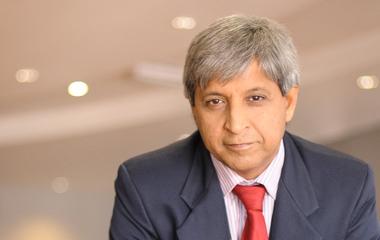
Addressing the Second Biennial Conference of ARUA from 18-20 November in Nairobi, University of the Witwatersrand Vice-Chancellor Professor Adam Habib challenged the alliance, made up of over 350 African researchers, to provide leadership by ensuring that Africa generates more solutions to address the continent’s development goals.

“If Africa can’t tell its own stories and generate its own knowledge, it has no capacity to be free,” he said. “The big challenge at this time is that Africa produces only 1% of research, which is a crisis for the world and Africa. We can’t speak about inclusion, development and the African renaissance if we don’t have the capacity to generate our own knowledge,” said Habib.

The ARUA conference was hosted by the University of Nairobi and sponsored by United Kingdom Research and Innovation in collaboration with the Carnegie Corporation of New York, South Africa’s National Research Foundation and US-based Clarivate Analytics.

It brought together over 300 delegates, including top management from African universities and policy-makers and researchers from around the world, to share knowledge and ideas on the role of African universities in the Fourth Industrial Revolution (4IR).

If Africa cannot tell its own stories and generate its own knowledge, then “it has no capacity to be free”, said Habib. Furthermore, taking control of its own narrative would mean a better chance of addressing development challenges.

Transnational challenges

Emphasising the transnational nature of the challenges facing Africa and the world, he said such challenges could not be resolved within national boundaries. “Climate change doesn’t change at the boundaries; it transcends boundaries, so you need transnational researchers,” he said.

Referring to the Ebola crisis in West and Central Africa as a “socio-political crisis” rather than a pharmaceutical or technological crisis, he said: “Science and technology are not neutral. They require a deep understanding of the context.”

As a pan-African entity, Habib said ARUA could provide a platform for a university-based community of researchers to “not simply to look at research challenges between national boundaries, but to look at pan-African challenges as a component of global challenges”, addressing those challenges first as pan-Africans and then as part of the “global academy commons”.

“We are here to appreciate Nairobi and Kenya, but also have the responsibility to become pan-African researchers .. and to transcend boundaries to contribute to the global platform… and to create a network that in five or 10 years is not striving for 1% [of global knowledge output], but striving for 5% or 10%.”

He urged researchers to “build a bridge of human solidarity to address the research challenges of our time”.

Claudia Frittelli, international programme officer from the Carnegie Corporation of New York, acknowledged the researchers for their efforts in addressing critical challenges facing the continent (such as inequality, migration, identity, governance, climate change, disease, urbanisation, food security, water and energy crises, and employability).

This has been aided by centres of excellence, building research capacities at universities, and contributing to global platforms, she said.

Technology

“We need to think about the ways people experience technological changes brought by research as much as creating the technological change itself,” said Frittelli, who questioned the use of hybrid learning that is not inclusive.

Academics need to think about who research or technological changes disadvantage, as well as their social consequences, especially how they may affect teaching and learning at universities, she said. “The way we conduct relations will change. The purpose of universities is to understand who we are and where we come from and understand the technologies that enable us to live a better life,” said Frittelli.

Delegates at the conference said the role of African universities has changed in the wake of 4IR and called for more doctoral training. “The question is, how are universities preparing students for the Fourth Industrial Revolution?” said Dr. Beatrice Muganda, Higher Education Programme Director at the Partnership for African Social and Governance Research, based in Nairobi.

Muganda called for continuous innovation focused on teaching and learning models that suit the modern world and adequately prepare students.

While delegates acknowledged the need for Africa to produces more PhDs, most speakers also emphasised the need for models of teaching that produce high-quality doctorates.

This has been reposted from https://bit.ly/35EwtSG

The aim of the African Research Universities Alliance or ARUA to increase Africa’s contribution to global research output and its commitment to strengthening the continent’s research base are ‘fundamental’ to nurturing and supporting the Fourth Industrial Revolution (4IR) in Africa.

Professor Margaret Dallman, vice president (international) and associate provost at Imperial College London, told University World News that ARUA’s strategic aim of increasing Africa’s contribution to global research to 5% from 1% over a 10-year period was “fundamental to nurturing and supporting” the 4IR in Africa.

Dallman, who addressed ARUA’s Second Biennial Conference – held in Nairobi, Kenya, from 18-20 November – on the issue of STEM (science, technology, engineering and mathematics) and skills drivers of the 4IR, said: “ARUA recognises that a growing research base provides the platform to harness Africa’s unique talent and provide the pipeline of discoveries which will drive new industries, be it advances in synthetic biology that drives food production and agri-tech, or breakthroughs in mathematical sciences that underpin precision medicine and drug discovery.”

She said Imperial College London’s joint seed fund with the Massachusetts Institute of Technology (MIT) and African institutions aims to play a very small part in those endeavours by seeding risky, ‘blue skies’ research projects that have a small chance of being genuinely transformational.

Innovative curricula

In addition to building research capacity, she agreed it was important to develop innovative curricula for students – “many of whom may [one day] be working in sectors that do yet exist, and focusing on the crucial skills of creativity and critical thinking across disciplines”.

She said universities have to use their “unique convening power – and many ARUA members are working along these lines with their developing incubators and hackspaces – to bring together scientific researchers, corporate partners, entrepreneurs, and the local community to turn cutting-edge scientific research into real-world benefits for society”.

Emphasising the potential of ARUA to play a leadership role in the 4IR, international consultant and lecturer at the University of Nairobi’s Institute for Climate Change and Adaptation in Kenya, George Odera Outa, told University World News that, if nurtured, ARUA could “lead not only to closer intra-African collaboration among African scholars but also create crucial linkages with the Global North for mutual benefit, cross-learning as well as some form of equity”.

‘A visionary start’

“I think ARUA is off to a visionary start in the leap towards a Fourth Industrial Revolution,” said Outa who delivered a presentation on humanities-science and social research collaboration.

Oluyemi Theophilus Adeosun, lecturer at the University of Lagos in Nigeria, said in order to catch up in the 4IR stakes, greater institutional research capacity would help Africa to “leapfrog in the development space”.

“We lost out in the last industrial revolution and we must lead the world based on our increasing youth population,” he said.

“We must embrace multi- and trans-disciplinary and collaborative research along with embracing new technology in education and knowledge dispensation in order to bridge the Africa skills gap,” said Adeosun, who presented a presentation on university internships and preparation for the world of work in the 4IR.

“We must be flexible to ensure inclusive learning, distance and electronic learning with exposure to digitisation, machine learning, artificial intelligence, etc,” Adeosun said.

“We must improve industry collaboration, internship systems, innovation hubs and labs focused on achieving the Sustainable Development Goals and resolving local challenges based on community engagements, along with enhancing exchange programmes for students both within the Global South and North,” Adeosun said.

“African governments and the private sector must commit more resources to funding education, research and capacity building.

“Just like M-Pesa [a mobile phone-based money transfer system] was novel to the world, we must birth more solutions for local and global benefits,” Adeosun said.

Lifelong learning

According to Professor Zeblon Vilakazi, deputy vice-chancellor of research and postgraduate affairs at the University of the Witwatersrand in South Africa, lifelong learning is and will be central to the process of university curriculum design as changes relating to the Fourth Industrial Revolution advance at an exponential pace.

Vilakazi, who delivered a keynote address on “Getting Africa quantum ready”, told University World News it was too early for universities to “copy and paste” past international best practice in preparation for the 4IR as both the Global South and North were grappling with the changes.

However, he said there were priorities relating to the strengthening of institutional research capacity in Africa. These include reviewing curricula and a greater integration of research and teaching functions, both of which should be informing the other.

“We should ensure that lifelong learning becomes central in how universities structure their curriculum, as these changes are advancing at an exponential pace and therefore some agility and dynamism is needed,” he said.

“Key to this is the integration of our research agenda with the global knowledge commons,” he said.

Vilakazi stressed the need for an appropriate balance between STEM disciplines and the humanities and social sciences, advocating, where appropriate, a breakdown of the “Berlin Wall” traditionally separate disciplines.

While agreeing that Africa and its universities can be active agents, rather than passive recipients in the rapidly evolving “technological exponential” that characterises the Fourth Industrial Revolution, he said: “The African higher education system is varied and also depends on the state of development of a country, so a monolithic approach would not be appropriate for African universities to follow for 4IR.”

He said some of the technologies that 4IR will bring could also be greater equalisers. “Mobile technologies, for example, have helped in giving endless opportunities to those that have hitherto been left behind by the earlier revolutions which were heavily infrastructure-laden, and that alone created longer lag times,” he said.

Integration of teaching and research

Echoing some of Vilakazi’s observations, Alex Ezeh, professor of global health at United States-based Drexel University, who spoke at the conference on building institutional research capacity, told University World News he anticipated that research and teaching or learning would become “even more closely intertwined” in the 4IR.

”Institutions that are strong in research are more likely to be strong in preparing graduates who can go out and make a progressive difference as employees or entrepreneurs in practically any sector of the economy,” said Ezeh, who is also the founding executive director of the Consortium for Advanced Research Training in Africa (CARTA), an initiative to strengthen doctoral training and the retention of academics at African universities.

“To fit into the new economy of the 4IR, African graduates of the future will need less of memorised facts and more of critical thinking and data manipulation skills, which are best acquired in a laboratory or research environment,” he said.

”Research – fundamental and applied research – enables us to master current knowledge, to generate new and forward-looking knowledge, to resolve problems that are bound to emerge along the way, and to lay a solid foundation of evidence upon which future innovation can be built,” he said.

Highlighting the importance of innovative teaching, Beatrice Muganda, director of the higher education programme at the Partnership for African Social and Governance Research based in Nairobi, Kenya, told University World News that “appropriate pedagogical interventions are critical for developing competencies in collaboration, communication, problem-solving, creativity and critical thinking that are mandatory for active participation in 4IR”.

Muganda, who chaired a session on new approaches to higher education, said: “It is for this reason that ARUA is partnering with the Pedagogical Leadership in Africa (PedaL) project that trains university teaching staff to unleash their creative capacities in preparing the next generation of graduates to be holistically grounded.”

This has been reposted from https://bit.ly/2OwpFB1

Long accused of being inflexible, African universities have, through a partnership-based research initiative focused on public policy, helped uncover a long-hidden truth: “Universities are not only open to innovative ideas and programmes but can also domesticate, own, finance and nurture them.”

This is according to Beatrice Muganda, programme Director for the Partnership for African Social and Governance Research or PASGR.

Three years ago, PASGR initiated a regional masters in research and public policy. Today it is producing a strong generation of African public policy leaders.

In a review of the programme, Muganda said the universities have effectively integrated the new Master’s programme into their systems, and are meeting the operational costs associated with its delivery.

The programme has drawn attention to the study of public policy as distinct from public administration and management and catalysed the establishment of schools of public policy in South Africa.

“It has raised the profile of participating universities as powerhouses of robust debates on public policy informed by various lenses of opinions by students from various academic and work backgrounds or experience,” she said in an interview with University World News.

There are now 13 universities that offer the programme, namely Nairobi, Egerton, Maseno, Uganda Martyrs, Uganda Christian, Botswana, Dar es Salaam, Mzumbe, Ghana, Lagos, Jos, Ibadan and Sierra Leone.

Between 2014 and 2017, 415 students have enrolled in the programme, surpassing the target by 115 students. The retention rate of 85% is high, with the mostly fee-paying students showing impressive performances.

Filling a gap in research and policy

“It demonstrates amazing faith in the programme to fill a gap in research and public policy,” Muganda, said, adding that masters graduation rates have improved from 19% (achieved in South Africa) to 39%, which is unrivalled by other graduate programmes in African countries.

A total of 30 students have graduated from the first cohort of 77 and 59% of the students are working in advocacy NGOs, research organisations and in various policy-related work in governments.

For example, David Yusuf Segun of the University of Lagos in Nigeria won a fellowship to present a paper at the Resilience 2017 conference on Resilience Frontiers for Global Sustainability in Stockholm, Sweden in August this year, while Kenneth Ogutu, together with his supervisor Professor Mark Okere of Egerton University in Kenya, jointly developed an award-winning proposal on the effects of community policing policy on crime in low-income areas of Nakuru County, Kenya.

Muganda said the programme had produced growth and development in departments and policy centres in terms of teaching and learning materials, and technology. There had also been an increase in staff numbers and improvement of staff capacity.

“We have seen increased attention paid to the dynamics of teaching and learning in university programmes as opposed to enrolments and graduation statistics,” she said.

The two-year Masters treats public policy as an area for research as well as professional practice while focusing on African policy priorities. It draws on multiple social sciences to ground students in relevant theory and concepts.

Muganda said the programme was aimed at social science researchers and policy practitioners. The research option in the programme is designed to build competencies in the design and execution of policy-relevant research or provide sound grounding for doctoral programmes and advanced scholarship in universities and other organisations that undertake research, she said.

The policy practitioner option equips graduates to use research to influence, inform or shape public policy in government, public and private sector organisations in general, civil society organisations, media, and regional and international organisations.

Programme spinoffs

The programme has produced rich training material, and training in innovative pedagogy for university teaching staff can be taken up and offered to other university teaching staff outside of the degree programme.

According to Muganda, there are 38 case studies on African public policy issues authored by teaching staff from African universities available to be used to teach social science programmes on the continent, while there are 24 content videos that can be used to deliver social science programmes.

One of the biggest challenges facing the programme is limited scholarships. Currently, there are 10 scholarships available from the German Academic Exchange Service or DAAD catering for East Africa, and a few from the Konrad-Adenauer-Stiftung foundation.

According to Muganda, the initiative is exploring partnerships with governments to support students on the programme. This has worked effectively in Tanzania while other discussions are ongoing.

“MRPP [Masters in research and public policy] students understand that education cannot be advanced sustainably through dependence. They are therefore willing to invest in themselves, to develop competencies that can enable them to participate in shaping their destinies and those of other citizens through sound public policy and leadership,” she said.

The success of the programme has brought additional challenges in the form of growing interest from other universities wishing to join the MRPP network. “This requires additional resources so we keep fundraising,” said Muganda.

Teaching incentives

Muganda said they have limited incentives for rewarding teaching excellence and the partnership is engaging universities to develop and implement micro policies that recognise and reward teaching excellence and support teachers in showcasing their expertise to colleagues in other universities under a staff mobility programme.

PASGR hopes to keep training a critical mass of teaching staff and develop a system for inducting and mentoring new teachers who join the partnership to keep the work going, she said.

“One of our challenges has been limited connectivity and access to internet services which frustrates the creation and use of online digital content,” said Muganda. The solution has been to encourage non-web-based local area network-based solutions – intranet – and encourage universities to tap into the existing national research and educational networks.

“Our programme still needs to do more in bringing African policy-makers and researchers together to facilitate uptake of emerging research findings to influence public policy for the well-being of all,” she said.

This has been reposted from https://bit.ly/32si1v9

On 25th October, the British Council  co-hosted a high-level conference on Africa-Europe collaboration in Higher Education, a joint initiative by the European Commission, the African Union Commission and four European partner organisations that have a long history of cooperation with the African continent – British Council, the German Academic Exchange Service (DAAD), Campus France and Nuffic Netherlands.

The conference was structured around a series of workshops in which more than 400 policy-makers and representatives of the higher education sector from Africa and Europe discussed different aspects of collaboration in higher education between the two continents, and the challenges and opportunities stemming from higher education. A poster session showcased a wide range of initiatives and projects implemented by African and European partners. The event also provided sector-specific policy recommendations on how to further develop the charter “Investing in people by investing in education and skills” of the Africa-Europe Alliance, first announced by President of the European Commission Jean-Claude Juncker in September 2018. One central demand is that higher education and skills will feature prominently in the 6th Africa-EU summit, due to take place in 2020.

 “We recognise that higher education and skills acquisition are critical enablers for young people, allowing them to build sustainable livelihoods for themselves and others. Over 70% of Africa’s population are aged 18-35 so the need for higher education and skills is rising. We are responding to this demographic demand by expanding our higher education and skills programme and working with partners in African universities so that more of these young people can fulfil their potential.” said Louisa Waddingham, British Council’s Portfolio Lead for Higher Education, ahead of the event.

British Council works with governments, education and training institutions, industries, academics, and international donors to provide international education opportunities and improve the quality of higher education across Sub-Saharan Africa. By sharing international best practice and creating opportunities for dialogue, collaboration, research exchange, and mobility, the British Council helps to improve learning and employability outcomes for students, scholars, researchers, and academics. Most notably, the annual Going Global conference offers an open forum for global leaders of international education to discuss issues facing the international education community. Through the Partnership for African Social and Governance Research, the British Council’s project team helps to increase the capacity of African universities and researchers to conduct research that directly contributes to social and public policy in Africa.

This has been reposted from https://bit.ly/2JrkZcI

The requirement for college speakers to have the academic aptitudes that can engage understudies to procure 21st century abilities and assume liability for their learning in a procedure of co-development of information was featured at the opening whole session of the Partnership for Pedagogical Leadership in Africa (PedaL) West African center point preparing which occurred in Accra, Ghana in August.

More than 140 scholarly staff from African colleges speaking to all Sub-Saharan areas went to the preparation facilitated by the University of Ghana and co-gathered by the Nairobi-headquartered Partnership for African Social and Governance Research (PASGR) and PedaL accomplices: Institute of Development Studies and the University of Sussex in the United Kingdom; African Research Universities Alliance (ARUA); University of Ibadan; University of Dar es Salaam; Uganda Martyrs University and Egerton University.

Members called for ordinary updates and boost preparing in academic authority for school personnel to guarantee that instructing and learning is satisfactorily reacting to the difficulties of globalization, while likewise tending to nearby needs.

PedaL is an African-drove activity and one of nine projects upheld by Strategic Partnerships for Higher Education Innovations and Reforms (SPHEIR) under the United Kingdom’s Foreign, Commonwealth & Development Office (FCDO). Since its dispatch a year ago, it has seen exceptional development as college scholastics from over the mainland look to improve their instructing rehearses.

Until now, PedaL has prepared more than 800 scholarly staff drawn from 40 colleges crosswise over Africa. It is obvious that PedaL’s objective of preparing 1,000 school personnel in three years will be outperformed because of interest.

The instructional method envelops differed methodologies planned for changing the learning knowledge and accomplishing improved results in alumni sociology programs. The abilities picked up incorporate innovation upgraded learning, valuable arrangement of courses, a scope of understudy focused instructional methods, for example, contextual investigation educating, limit idea devices, just as a scope of issue-based learning procedures and creative evaluation methodologies.

Remarking on the significance of the preparation, Dr. Beatrice Muganda, PASGR’s executive for advanced education and the PedaL group pioneer, stated: “The accentuation set on 21st-century abilities implies that training perfection upheld in PedaL for personnel improvement has turned out to be much increasingly vital for fulfillment of college missions.”

This has been reposted from https://www.amarketjournal.com/how-could-the-learning-and-teaching-experience-transformed/54851/

Vice-Chancellor, University of Ilorin (UNILORIN), Professor Sulyman Age Abulkareem, has said the high level of poverty in Africa is the biggest disadvantage to advancing higher education.

He noted that: “We definitely have never had the adequate tools to do the right type of teaching and learning at the university level.”

Professor Abulkareem said this at the ongoing workshop tagged, ‘Western hub training,’ jointly organised by the University of Ghana (UG), Legon and Pedagogical Leadership in Africa (PedaL) and Master of Research and Public Policy (MRPP), supported by the United Kingdom Department for International Department (DFID), under the Strategic Partnerships for Higher Education Innovation and Reform (SPHEIR), at the Swiss Spirit Hotel and Suites, Alisa, Accra, Ghana.

Speaking further, he said: “African governments must work on harnessing educational aid from international organisations to put us on the same platform with the Western and other developed countries.”

He said that the methods of teaching and learning, especially in Nigeria, would have to go through serious changes, such that facilitators of teaching and learning at all levels must lookout for the best ways to communicate their teachings through and with relevant technologies.

“Today, lecturers are deficient in needed skills and technologies to actually take the students to the top, where they can compete favourably with their colleagues in the rest of the world, hence the need for them to improve and equip themselves in some certain skills,” he said.

He expressed joy for being part of the pedagogical leadership crusade that is ongoing on in Africa through PASGR’s PedaL team, saying that, “the innovation was timely and necessary at such as time as this in the history tertiary education in Africa.”

He enjoined participants who were drawn from African countries with the University Ghana playing the host, including other 12 participants universities in the sub-region to take the training seriously, as as to equip themselves with relevant innovations and methodologies to enhance effective teaching and learning in their various universities.

The vice-chancellor, University of Ibadan, Professor Abel Idowu Olayinka, who doubles as the chairman of the African Research Universities Alliance (ARUA),  on the occasion,  said it was imperative that researches carried out by the academic staff in universities must begin to influence teaching and learning, otherwise, the university will not be different from a glorified secondary school.

He charged university teachers to leverage more on technology to aid teaching and learning, noting that “the world outside there is becoming competitive by the day; therefore, lecturers need to challenge the students on the usage of technology, rather than for them to be engaged in radical unionism alone.”

Dr. Paul Effah, the president of Radford University College, Legon, Accra while speaking on the topic: ‘Faculty development’ advised university teachers to be deliberate about producing “students who can change the world, as well as activity-concerned citizen, who will turn out to be critical thinkers and ethical leaders.”

This has been reposted from https://tribuneonlineng.com/high-level-poverty-killing-education-in-africa-unilorin-vc/

AAU Talks host, Kwesi Sam interviews Dr. Akosua Agyemang, Department of Social Work, University of Ghana on her PedaL journey.

Kwesi Sam- AAU Talks hosts Dr. Ekua Ekumah, Immediate Past HoD, Department of Theater Arts, University of Ghana.