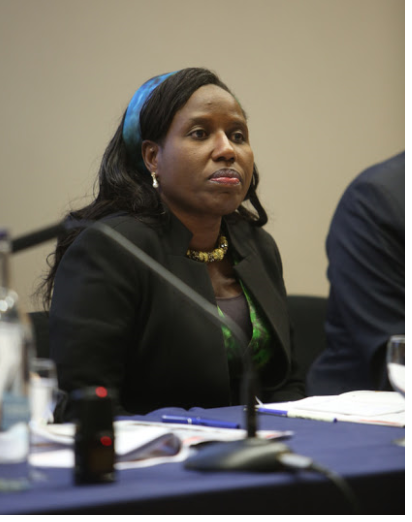
Minister of State for Tertiary Education, Ghana, Professor Kwesi Yankah, says there is an estimated students’ attrition of almost 50 percent in tertiary institutions within Africa.

He said there is low gross enrolment ratio in tertiary education within Africa, and that an abysmally low percentage of those whose ages fall within the bracket of 19 and 24 go through tertiary education.

Professor Yankah spoke as the special guest of honour at the opening ceremony of an eight-day workshop tagged ‘Western Hub Training,’ jointly organised by the University of Ghana (UG), Legon; Pedagogical Leadership in Africa (PedaL) and Master of Research and Public Policy, supported by the UK Department For International Development (DFID) under the Strategic Partnerships for Higher Education Innovation and Reform (SPHEIR), held at the UG and Swiss Spirit Hotel and Suites, Accra, Ghana.

“Our dropout rate only signals the lack of satisfaction among students with the environment in which they study,” he said.

Yankah further noted that Africa’s tertiary institutions almost exclusively concentrate on research and publication, sometimes considering effective teaching as an afterthought or an intrusion.

He, therefore, charged participant universities at the training on the need for learning and innovation centres where cutting edge teaching methodologies are taught and enjoined new faculty and teachers appointed to undertake workshops in pedagogy as part of their orientation prior to stepping into the classroom.

Professor Yankah said the current Ghanaian government has developed a policy that requires teachers in the university to obtain a teacher’s certificate as a major reform in teacher education.

The pro-chancellor of University of Ghana, Professor Kwame Offei, in his opening remarks said that the theme of PASGR/PedaL programmes closely aligned with UG’s vision of being a world-class university that is committed to scholarly excellence.

Declaring the Western Hub training open, he applauded PedaL initiative and collaboration with the university, noting that as a partner of PASGR/PedaL programmes since 2017, the effect of the training on quality of teaching had been immediate in the universities.

“Staff who have been trained have restructured their course outlines to incorporate pedagogical strategies such as case studies, flipped classroom, simulation, and role play, as attention to gender dynamics in delivery has been given due recognition.,” he said.

Speaking on the overview of the programme, the director of higher education/ PedaL team, Dr Beatrice Muganda, said the training was aimed at enhancing the competences of about 100 teaching staff of UG, with participation from 12 other universities in Ghana and the sub-region, so as to integrate pedagogical innovations in a cross-section of university programmes and to join the growing community of practice across the continent to share resources, knowledge, ideas and experiences during as well as after the workshop.

In his address, the founding chairman of PASGR, Professor Ernest Aryeetey, said PedaL training is important in Africa because the world around higher education learning has changed globally as a result of new technology.

“The needs of students are different today from what they were some 20 years ago; hence, the university system must prepare its lecturers accordingly,” he noted.

This has been reposted from https://tribuneonlineng.com/232620/
Prof. Kwame Offei Pro-Vice-Chancellor(University of Ghana) giving his opening remarks during the launch of the PedaL Western Hub Training at the University of Ghana.

Kwesi Sam, host AAU Talks interviewing Joseph Hoffman, Team Leader, Higher Education Programme, Strategic Partnerships for Higher Education Innovation and Reform (SPHEIR) on Partnerships for Higher Education Innovations & Reforms.

It was an opportunity for an estimated 170 participants to interact and exchange perspectives on emerging outcomes of pedagogical innovations. These included: government officials, education policy actors drawn from various national and regional organizations; university leaders and managers; research organizations; university teaching staff and students; the media; resource persons; and, PASGR staff.

Kwesi Acquah Sam, the host of AAU Talks, engages Dr. Beatrice Muganda, Director of Higher Education at the Partnerships for African Social and Governance Research (PASGR) based in Nairobi, Kenya on the Pedagogical Leadership Programme run by PASGR and its impact on transforming teaching and learning processes in Africa.

African universities need to “run faster in innovating technologies to compete globally”, according to Professor Crispus Kiamba, former permanent secretary in the Ministry of Higher Education, Science and Technology in Kenya and current faculty member of the School of the Built Environment, College of Architecture and Engineering at the University of Nairobi.

In his keynote address to the annual convention of the Partnership for Pedagogical Leadership in Africa (PedaL) held in Mombasa last month, Kiamba said: “In the past, slavery was based on race and colour. In the future, slavery will be based on technology … African universities need to run faster in innovating technologies to compete globally.”

Kiamba said innovations are needed to meet the needs of the modern student who expects that higher education will “mirror the information accessibility and immediacy of their connected lives”. He said students today demand that higher education meets their need for jobs and are thus considering options outside the traditional undergraduate and postgraduate studies.

The convention, that took place in Mombasa, Kenya from 24-28 June, was convened by the Nairobi-headquartered Partnership for African Social and Governance Research (PASGR), which is leading several partners to roll out PedaL, a formal partnership of eight institutions that aims to promote change in teaching and learning practices and to maximise learning outcomes in graduate social science programmes. 

PedaL is one of nine partnerships supported by the Strategic Partnerships for Higher Education Innovation and Reform.

Since the launch of PedaL a year ago, several universities across Africa have joined the partnership. These include Egerton, Maseno and the University of Nairobi in Kenya, University of Ibadan in Nigeria, University of Ghana, University of Dar es Salaam and Mzumbe University in Tanzania, Uganda’s Martyrs University, University of Sierra Leone and the University of Botswana. 

Technological innovations

Kiamba challenged over 200 academics from African universities attending the gathering to use technological innovations to bring systematic change to teaching and learning at their institutions. He said innovation in higher education should be anchored on problem-solving and creativity that improve the outcomes of education, and this will make universities attractive to key stakeholders: students.

Kiamba highlighted the good work being done by Kenyan hardware accelerator venture Gearbox that allows engineers and people with no formal training in engineering to innovate around hardware. The space also gives university students an opportunity to access facilities and equipment not easily found locally, to apply practically what they learn in class, and turn their ideas into products. 

Government support

However, Kiamba, who is also a former vice-chancellor of the University of Nairobi, challenged African governments to support universities in their research for innovation quest. “Governments have a duty to support such ideas as Gearbox that are a game-changer for startups.”

He said the government support should come in the form of favourable policy environments in which universities could work, and financial support – especially for research. Investments by African governments in research programmes at universities make those institutions sustainable, said Kiamba, citing the PASET Regional Scholarship and Innovation Fund through which governments such as Kenya and Senegal have invested funds to support research in science and technology. 

Professor Tade Aina, executive director of PASGR, said that university academics, especially teaching staff unions, have a particular duty to raise awareness. “We need to make governments understand the implications of not acting to support universities financially,” said Aina.

The role of staff unions

He said staff unions should lead by drafting strong proposals and taking them to governments for funding instead of simply protesting. “University teaching staff unions are a big holdup to the transformation of higher education in Africa as they are not meeting expectations,” said Aina. 

During his tenure as the permanent secretary in the Ministry of Higher Education, Kiamba said that he took a proposal to parliamentarians and convinced them to support the increase of budgetary allocations for research to 2% of the country’s GDP. “Today, it is now a law in Kenya,” he said, commending the country for gradually increasing budgetary allocations for research, currently sitting at 0.8% of GDP, which is close to the African Union’s recommendation of 1%. 

Kiamba called for deliberate efforts to get African universities to support pedagogy, not only in social sciences but also in science, technology, engineering, and mathematics. 

“Pedagogy is a systematic thing that is very important especially for lecturers to teach students,” said Beatrice Muganda, the director of higher education at PASGR.

According to Muganda, PASGR is currently working in collaboration with the Alliance for Research Universities in Africa (ARUA), the University of Sussex’s Institute of Development Studies and five universities to develop and roll out PedaL in graduate social science programmes.

Training for teaching staff

Professor Bonaventure Rutinwa, the deputy vice-chancellor for academics at the University of Dar es Salaam, said massification of higher education should mean an increase not only in the number of students but also in qualified teaching staff. 

In an interview with University World News, Rutinwa said student enrolment increases had placed pressure on the system of mentorship his university had adopted whereby senior staff could guide junior staff. “We had many people coming into academia to teach but the experienced academics available to coach and mentor were few.”

Through the PedaL-PASGR initiative, he said, his university has benefited especially with the use of e-resources and the development of curricula. “This is timely because teaching methods change all the time. When I was doing law in the 1980s at the University of Oxford, there were no lectures; it was a tutorial system, going to the office of the lecturer and getting tutored because we were few,” said Rutinwa.

This year, he said, the University of Dar es Salaam had decided that “each and every member of the teaching staff” would undergo pedagogical training. Additionally, teaching staff will be assessed and promoted on the basis of publications and their teaching would be assessed according to set criteria.

This has been re-posted from https://www.universityworldnews.com/post.php?story=20190712091742200

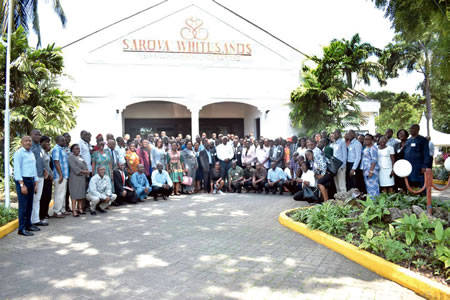
Participants at the Pedagogical Leadership in Africa (PedaL) Annual Convening and Collaborative Master of Research and Public Policy (MRPP) Week, organised by Partnership for African Social and Governance Research (PASGR), held at the Sarova Whitesands Hotel, Mombasa, Kenya. Photo: Modupe George.

The Executive Director of Partnership for African Social and Governance Research (PASGR), Nairobi Kenya, Professor Tade Akin Aina, says the world is entering into a knowledge economy that is evidence-based, developed and generated through protocols and processes either in the humanities, sciences or technology.

He stated this on Monday in his opening remarks at the opening of the maiden edition of Pedagogical Leadership in Africa (PedaL) Annual Convening and Collaborative Master of Research and Public Policy (MRPP) Week organised by PASGR and supported by the UK Department For International Department (DFID) under the Strategic Partnerships for Higher Education Innovation and Reform (SPHEIR), held at the Sarova Whitesands Hotel, Mombasa, Kenya.

While noting that the world is at the verge of the fourth industrial revolution, Professor Aina emphasised the need for legitimate producers of knowledge to be adequately equipped and look into correction mechanisms, especially at the university level, in order to be able to fit into the revolution.

He charged the facilitators drawn from 21 universities in Africa at the event to embrace innovations in teaching and learning, saying that “for students to learn effectively, they must have exceptional and memorable moments. They need an array of different ways of learning and teaching and an assortment of variety, which include e-cases, role playing, role acting, dialogue, group work and so forth.”

Speaking on the rationale of the joint annual convening, the director, Higher Education Programme, PASGR and PedaL’s team leader, Dr Beatrice Muganda, said it was an avenue for university teaching staff to share experiences, impact stories, consult peers, validate and track progress made in translating the PedaL training into pedagogical innovations in their classrooms.

At the end of the week-long event, she said participants would showcase their achievements, prospects, and challenges through e-portfolios and reflect on their individual pedagogical journeys.

Mrs. Muganda added that the MRPP Week was deliberately planned to coincide with the PedaL annual convening to consolidate gains made in innovating in delivery of the signature programme and also for the MRPP to celebrate landmark achievements following the four years of implementation in 13 universities in seven African countries.

“The joint events will share programme outcomes with government officials, university leaders; policy actors from education and research communities; the media; development partners; and university teaching staff and students across the continent. The aim is to secure broad-based ownership and build momentum for replication of the innovations towards creating greater impact,” Dr. Muganda said.

Former Permanent Secretary, Ministry of Higher Education, Professor Crispus Kiamba, while delivering the keynote lecture on the topic: ‘Innovation in Higher Education: Prospects for African Universities’ said in order for African universities to educate learners for the fourth and future industrial revolutions, there is the need to embrace technologies associated with them.

He said there is also the need to make education systems, programmes and curricula flexible, allowing for students’ interests and needs, while teachers, who are primary facilitators of learning, should also be continuously learning so they can acquire the necessary skills and competencies.

Professor Bonaventure Rutinwa, deputy vice-chancellor, University of Dar es Salaam, Tanzania; and Dr Ezekiel Adeyi from the University of Jos, who spoke with the Tribune Education on the impact of PedaL to tertiary education described what PedaL is doing as a total departure from the conventional way of training teachers on new content delivery methods.

Professor Natasja Holtzhausen from the University of Pretoria, South Africa, in her remark said “apart from the opportunities PedaL brings to students, those who benefit the most are the lecturers because they are equipped with the much-needed skills. Each time I work with PASGR, I learn something new.”

According to Joseph Ogana, a year two student of Master of Research and Public Policy (MRPP) from University of Dar es Salaam, Tanzania, “the conference is a very good platform for both students and lecturers of MRPP and also policy makers because, it brings these three main important stakeholders together on one platform through which they share experiences and how they can work together as partners.

A total of 170 participants drawn from the 21 universities across Africa are in attendance at the ongoing conference.

The 21 African universities are; University of Ibadan, Uganda Martyr’s University, University of Dar es Salaam, Egerton University, University of Ghana, University of Nairobi, University of Sierra Leone, University of Jos, University of Pretoria, University of IIorin, Maseno University, Makerere University, University of Nigeria, Nsukka, Uganda Christian University, University of Lagos, University of Botswana, Association of African Universities, Azumbe University, Strathmore University, Technical University of Kenya and Moi University.

This has been reposted from https://tribuneonlineng.com/221830/

Dr. Beatrice Muganda Dir. Higher Education Programme at PASGR in an interview with the Association of African Universities (AAU) Talks on Pedagogical Leadership and its Contribution to Higher Education in Africa.

This has been re-posted from https://youtu.be/PqAJ8a9oEbM

Pedagogical leadership skills among others have been described as “must-have” to transform Higher education on the continent of African. 
The Director of Higher Education at the Partnership for Social and Governance Research (PASGR), Nairobi, Kenya, Dr. Beatrice Muganda stated this while featuring on Diamond Fm Radio, University of Ibadan. 
The Education Policy expert asked lecturers and institutions of learning to incorporate trans-formative curriculum design; technology-enhanced learning, group work, e-cases and digitally enabled stories to achieve the best learning outcomes. According to her, there was the need for African researchers and lecturers to incorporate pedagogical skills in teaching to catalyze exceptional learning moments.

Dr. Muganda who noted that the University of Ibadan has been playing a leadership role among the partner institutions added that the goal of pedagogical leadership in African higher education is to transform lecturers to facilitators and students to co-creators of knowledge.

She noted that the old strategy of spoon-feeding students has not achieved the best learning outcomes urging lecturers to break the barriers and make their classes more interactive by making their students active.“We need pedagogical leadership in African institutions in order to transform the way teaching and learning happen. We need to mobilize resources to catalyse exceptional learning moments. PedaL will transform a lecturer to a knowledge facilitator and make students co-creators of knowledge. We must embrace technology in African to enhance learning outcomes and improve interactions in the learning spaces. All lecturers need pedagogical training and skills to get the best outcomes for African transformation”

This has been re-posted from https://www.osundaily.com/2018/12/there-is-need-for-pedagogical-skills-to.html

Something exciting is happening in higher education in Africa. Unlike basic education where the curriculum is centralized and often changed at whim, the higher education curriculum tends to be stabilized for a longer time. Universities also have the right to select what to teach, who to teach and how to teach. But in there lies the problem: lethargy in teaching with resultant inefficient learning.

Employers have had occasion to complain about the quality of graduates in terms of skills and attitudes to work. To fill the perceived gap in skills, the Partnership for African Social and Governance Research ( PASGR), a nongovernmental organization, came up with an idea to revolutionize teaching processes in African Universities. Prior to this, PASGR had enjoined seven universities to develop and teach a programme on Master of Research and Public Policy. Experience from MRPP showed that apart from content what ailed African Universities more was a lack of effective pedagogical skills. Many university lecturers are still hooked to the cathedral lecture approach. However, it is important that universities refocus their teaching methodology to make it more learner-centred.

Learning should be about the learner, not about the teacher. The transformative curriculum tackles the delivery modes. What is learned depends on how teaching is done. The world over there are shifts to embrace the outcomes approach to learning by assisting learners to construct knowledge rather than delivering knowledge which lecturing tries to do.

Higher Education

Against this background, PASGR decided to develop a postgraduate course in pedagogy dubbed Pedagogical Leadership in Africa (PedaL). PedaL is funded by a number of development partners under the auspices of Strategic Partnerships for Higher Education Innovation and Reform supported by UKaid. In this specific case, the United Kingdom appears to put its money in the right spot: the impact is immediate!

PASGR has incorporated a diverse team with a shared vision of transforming teaching and learning practices to enhance the quality of graduate programmes. Other founder members include the University of Ghana, the University of Ibadan, Uganda Martyrs University, the University of  Dar es Salaam,  Egerton University; The Institute of Development  Studies (at the University of  Sussex, UK); and, Alliance for Research  Universities in Africa. The PedaL training programme was developed in a participatory process between April and June 2018. The curriculum design team included university academics, policy actors, prospective employers and resource persons from the region and the United Kingdom. The Open University and Institute of Development Studies at Sussex played benchmarking and quality assurance roles. The programme was piloted in July 2018 and over 160 faculties from 20 universities trained in Nairobi in August 2018.

PedaL plans to move the training to individual country level universities. For example, during the last week of January 2019, the University of Nairobi’s Department of Political Science and Public Administration hosted PedaL for a centralized training stint. In the last week of February, five universities in Uganda led by The Uganda Martyrs University will host an eight-day PedaL centralized training session.

Training sessions

One hundred and forty lecturers from Makerere, Gulu, Kisubi, and Kyambogo have confirmed attendance. In April 2019 PedaL training is scheduled to move to West Africa. In September 2019 two universities in Kenya are scheduled to host the PedaL centralized training sessions. Clearly, PedaL’s greatest impact will be to solidify and expand the base for pedagogical innovations in universities in Africa. The revolution is in persuading faculty to adopt better learner-centred methods of teaching.

In the PedaL training model, centralized training takes ten days of a face-to-face encounter. Thereafter learners are engaged in distance learning through a safe Learning Management System platform. The interaction between facilitator and learner is real time.

Initially, there was apprehension that many university lecturers would resist the application of modern technology. Experience has shown the contrary. The faculty is eager to apply new methods of teaching.

Lecturers want to know how they can effectively utilize the flipped classroom method, simulation and role play, case method and e-cases to present content in fresh and memorable ways.

There is plenty of excitement during training workshops on the use of technology to enhance learning. Lecturers want to know how they can prepare and use videos, slides and electronic 3-dimensional materials to teach more effectively.  Age does not appear to hinder uptake of technology-enhanced learning, a hallmark of PedaL.

Follow up on what lecturers are doing when they get back to their universities reveals further deepening of skills acquired.

Clearly, the role of the lecturer in the African university will soon change. The university classroom will no longer be the place for lecturers to work very hard.

Instead, it will change to become a place for lecturers to design learning for students to work hard and learn by themselves for themselves. But governments have to play the role of providing modern facilities. Four walls are no longer sufficient.

Prof Ongeti is a specialist in Curriculum and Learning Designs at Moi University

This has been re-posted from https://www.standardmedia.co.ke/article/2001311864/teaching-in-universities-won-t-be-the-same-again