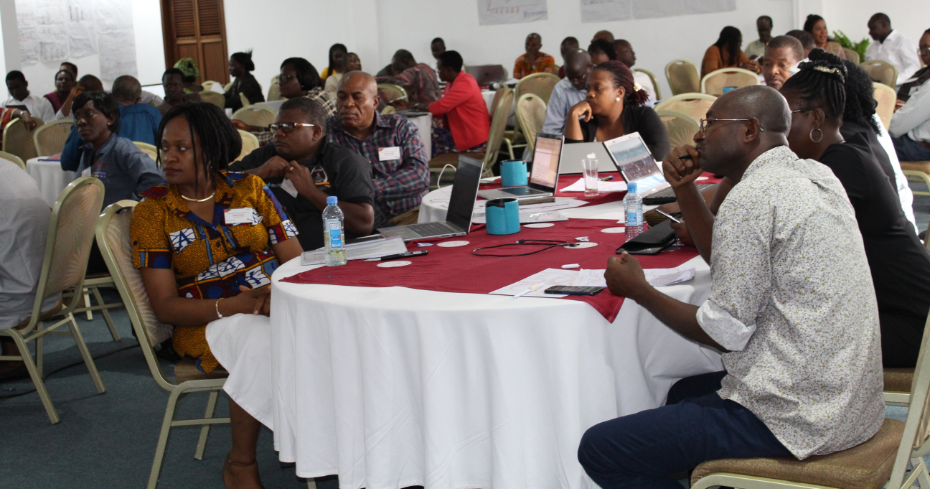
It was an opportunity for an estimated 170 participants to interact and exchange perspectives on emerging outcomes of pedagogical innovations. These included: government officials, education policy actors drawn from various national and regional organizations; university leaders and managers; research organizations; university teaching staff and students; the media; resource persons; and, PASGR staff.
Tag: PedaL
Themed ‘Pedagogy on the Move: Our Journeys’; the joint event was hosted by PASGR and its partners in the Pedagogical Leadership in Africa project as well as the collaborative Master of Research and Public Policy (MRPP) programme. It was held at the Sarova Whitesands Hotel, Mombasa, Kenya on June 24 – 28, 2019 and marked by a series of activities: from a one day conference with a watershed keynote address; to two days of documenting and sharing pedagogical journeys; and, a standalone Trainer of Trainers’ programme for resource persons.
It was an opportunity for an estimated 170 participants to interact and exchange perspectives on emerging outcomes of pedagogical innovations. These included: government officials, education policy actors drawn from various national and regional organizations; university leaders and managers; research organizations; university teaching staff and students; the media; resource persons; and, PASGR staff.
Pivotal in the event were teaching staff who have been trained in PedaL pedagogy and translated the newly acquired skills into practice over a period of one year. The teachers shared their experiences as well as lessons learnt. The objective was to inspire exchanges; promote opportunities for leveraging, adapting, testing, and sharing available resources, knowledge, and technology to enhance and broaden best practices in teaching and learning in African universities.
Kwesi Acquah Sam, the host of AAU Talks, engages Dr. Beatrice Muganda, Director of Higher Education at the Partnerships for African Social and Governance Research (PASGR) based in Nairobi, Kenya on the Pedagogical Leadership Programme run by PASGR and its impact on transforming teaching and learning processes in Africa.
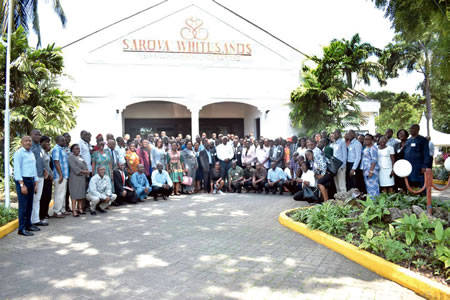
170 participants from the 21 universities across Africa were in attendance at the Pedagogical Leadership Annual Convening and Collaborative Master of Research and Public Policy week organized by the Partnership for African Social and Governance Research (PASGR) and supported by the UK Department For International Department (DFID) under the Strategic Partnerships for Higher Education Innovation and Reform (SPHEIR), held at the Sarova Whitesands Hotel, Mombasa, Kenya.
Professor Tade Akin Aina, the Executive Director, PASGR, said that an investment in knowledge pays the best interest. “The world is at the verge of its fourth revolution thus the need for producing innovative and critical thinkers of knowledge at our universities,” he added during his opening remarks at the event.
He urged the participants drawn from the 21 universities in Africa to embrace technology and innovations both in learning and teaching. This will ensure that students learn more interactively and effectively.
The convening dubbed “Pedagogy on the move: Our Journeys” was a channel for university teaching staff to share experiences, stories, consult peers, validate and track growth made in transforming the PedaL training into pedagogical innovations in their classrooms.
Dr. Muganda, Director- Higher Education Programme at PASGR said that pedagogy must be oriented not to the yesterday but to the tomorrow. Only then can it call life into future development. “We have trained over 650 teaching staff in 30 participating universities,” she added.
The MRPP Week was purposefully planned to correspond with the PedaL annual convening to consolidate gains made in innovating in delivery of the signature programme and also for the MRPP to celebrate landmark achievements following the four years of implementation in 13 universities in seven African countries.
Also in attendance was Prof Kiamba, Former Permanent Secretary, Ministry of Education. He gave a keynote lecture on ‘Innovation in Higher Education: Prospects for African Universities’. He said, “There is the need to embrace technologies associated with innovation.” By doing so, it will equip lecturers to be more effective in teaching and producing students that are innovative oriented to face the fourth industrial and future revolutions.
During the presentations of their experiences, one of the lecturers said, “I was not a fan of technology. I am a fan of pedagogy, of understanding how people learn and the most effective learning methods. But technology enables some exciting changes. PedaL has made classrooms to be more interactive and lively. I am born again.”
This caucus brought together 21 universities namely: University of Ibadan, Uganda Martyr’s University, University of Dar es Salaam, Egerton University, University of Ghana, University of Nairobi, University of Sierra Leone, University of Jos, University of Pretoria, University of Ilorin, Maseno University, Makerere University, University of Nigeria, Nsukka, Uganda Christian University, University of Lagos, University of Botswana, Association of African Universities, Azumbe University, Strathmore University, Technical University of Kenya and Moi University.
The Executive Director of Partnership for African Social and Governance Research (PASGR), Nairobi Kenya, Professor Tade Akin Aina, says the world is entering into a knowledge economy that is evidence-based, developed and generated through protocols and processes either in the humanities, sciences or technology.
He stated this on Monday in his opening remarks at the opening of the maiden edition of Pedagogical Leadership in Africa (PedaL) Annual Convening and Collaborative Master of Research and Public Policy (MRPP) Week organised by PASGR and supported by the UK Department For International Department (DFID) under the Strategic Partnerships for Higher Education Innovation and Reform (SPHEIR), held at the Sarova Whitesands Hotel, Mombasa, Kenya.
While noting that the world is at the verge of the fourth industrial revolution, Professor Aina emphasised the need for legitimate producers of knowledge to be adequately equipped and look into correction mechanisms, especially at the university level, in order to be able to fit into the revolution.
He charged the facilitators drawn from 21 universities in Africa at the event to embrace innovations in teaching and learning, saying that “for students to learn effectively, they must have exceptional and memorable moments. They need an array of different ways of learning and teaching and an assortment of variety, which include e-cases, role playing, role acting, dialogue, group work and so forth.”
Speaking on the rationale of the joint annual convening, the director, Higher Education Programme, PASGR and PedaL’s team leader, Dr Beatrice Muganda, said it was an avenue for university teaching staff to share experiences, impact stories, consult peers, validate and track progress made in translating the PedaL training into pedagogical innovations in their classrooms.
At the end of the week-long event, she said participants would showcase their achievements, prospects, and challenges through e-portfolios and reflect on their individual pedagogical journeys.
Mrs. Muganda added that the MRPP Week was deliberately planned to coincide with the PedaL annual convening to consolidate gains made in innovating in delivery of the signature programme and also for the MRPP to celebrate landmark achievements following the four years of implementation in 13 universities in seven African countries.
“The joint events will share programme outcomes with government officials, university leaders; policy actors from education and research communities; the media; development partners; and university teaching staff and students across the continent. The aim is to secure broad-based ownership and build momentum for replication of the innovations towards creating greater impact,” Dr. Muganda said.
Former Permanent Secretary, Ministry of Higher Education, Professor Crispus Kiamba, while delivering the keynote lecture on the topic: ‘Innovation in Higher Education: Prospects for African Universities’ said in order for African universities to educate learners for the fourth and future industrial revolutions, there is the need to embrace technologies associated with them.
He said there is also the need to make education systems, programmes and curricula flexible, allowing for students’ interests and needs, while teachers, who are primary facilitators of learning, should also be continuously learning so they can acquire the necessary skills and competencies.
Professor Bonaventure Rutinwa, deputy vice-chancellor, University of Dar es Salaam, Tanzania; and Dr Ezekiel Adeyi from the University of Jos, who spoke with the Tribune Education on the impact of PedaL to tertiary education described what PedaL is doing as a total departure from the conventional way of training teachers on new content delivery methods.
Professor Natasja Holtzhausen from the University of Pretoria, South Africa, in her remark said “apart from the opportunities PedaL brings to students, those who benefit the most are the lecturers because they are equipped with the much-needed skills. Each time I work with PASGR, I learn something new.”
According to Joseph Ogana, a year two student of Master of Research and Public Policy (MRPP) from University of Dar es Salaam, Tanzania, “the conference is a very good platform for both students and lecturers of MRPP and also policy makers because, it brings these three main important stakeholders together on one platform through which they share experiences and how they can work together as partners.
A total of 170 participants drawn from the 21 universities across Africa are in attendance at the ongoing conference.
The 21 African universities are; University of Ibadan, Uganda Martyr’s University, University of Dar es Salaam, Egerton University, University of Ghana, University of Nairobi, University of Sierra Leone, University of Jos, University of Pretoria, University of IIorin, Maseno University, Makerere University, University of Nigeria, Nsukka, Uganda Christian University, University of Lagos, University of Botswana, Association of African Universities, Azumbe University, Strathmore University, Technical University of Kenya and Moi University.
This has been reposted from https://tribuneonlineng.com/221830/

African universities need a systematic change in teaching and learning approaches to help lecturers deal with growing student numbers and inadequate facilities and to produce graduates who can make meaningful contributions in today’s knowledge-based economies.
This message was a key driver of discussions at a pedagogical leadership training session aimed at lecturers in the social sciences from five countries in Africa, held in Nairobi, Kenya, from 8-14 July.
This has been re-posted from https://bit.ly/2Egh4gL