The University of Pretoria’s School of Public Management and Administration (SPMA) will offer a new PhD programme in Public Policy, and prospective students will be able to apply for it in 2021. This development comes as a result of engagements between the SPMA and the Partnership for African Social and Governance Research (PASGR) in 2019, when UP staff met with Dr Beatrice Muganda, Dr Pauline Ngimwa and Executive Director Professor Tade Aina from PASGR. “The University has recently signed a Memorandum of Agreement with PASGR and we believe this will just strengthen the very good relationship the SPMA has formed with PASGR over the last year,” says Prof Natasja Holtzhausen, SPMA PhD coordinator. One of the discussion points was a PhD programme with a strong policy focus. With the support of the Faculty of Economic and Management Sciences and University management, Prof Holtzhausen and SPMA colleagues wrote a proposal that was submitted to all the relevant university committees to obtain permission for a degree that specialises in public policy. Top prospective students from across the continent were targeted. The Carnegie Foundation made 15 full scholarships available to fund exceptional PhD students. These 15 scholarships were shared among the three universities that were piloting the PhD, these being the University of Ibadan in Nigeria, the University of Nairobi in Kenya, and the University of Pretoria. The first students, mainly from Uganda and Nigeria, enrolled at UP in January 2020, but under the PhD Public Administration and Management programme. The PhD degree in Public Policy has since been approved by Senate and as of 2021, prospective students will be able to apply for this specific degree.
This has been reposted from https://www.up.ac.za/school-of-public-management-and-administration/news/post_2929457-spma-to-offer-new-phd-in-public-policy
The maiden
edition of The Policy Forum programme held on Monday, the 28th of
October, 2019; by 12 noon prompt at Four Points by Sheraton, Oniru
Chieftaincy Estate, Victoria Island, Lagos.
Of all the 5 growth drivers – strong institutions, human capital, entrepreneurship, culture, and public policy, public policy provides the framework for the development of all four, if driven by a leadership culture that prioritizes societal needs over pecuniary self-interests. Therefore, The Policy Forum shall attempt to position public policy making in its rightful pride of place as an integral part of Nigeria’s development trajectory by providing a space for policymakers to dialogue and exchange views with policy practitioners, diplomats, non-state actors, and other stakeholders on ‘a wide range of policy-centric topics.
Starting at the University of Nairobi
Doctor Of Philosophy (Ph.D.) In Public Policy The Department of Political Science and Public Administration, The University of Nairobi, in collaboration with Partnership for African Social and Governance Research (PASGR), invites applications for admission into the January 2020 intake for the Doctor of Philosophy Degree in Public Policy.
About The Programme
The doctoral programme in Public Policy aims at providing graduates with the knowledge, skills, and competencies that will enhance leadership in policy-relevant research, the practice of public policy and the advancement of scholarship in public policy. The innovative programme was collaboratively designed by sixteen African Universities to enhance interdisciplinary grounding in the practice of public policy and to deepen research competencies. The programme will also impart knowledge and skills in research communication, scholarly publishing as well as leadership in pedagogical practice for next-generation academics, researchers, policy practitioners, and leaders. Graduates will be highly motivated and adequately equipped to contribute to economic development and social transformation at the national and global levels.
Key Programme Features
Work with experts to resolve real policy problems
Continuous networking with prospective employers and key stakeholders
Strong Linkage with the Global Public Policy Network of Leading Schools Internationally
Our aim is to produce graduates that will form a unique cadre of world-class professionals in public policy and research for work in:
Governments
Think tanks
Civil Society Organizations
Regional and International organizations
Media
Universities
General Admission Requirements
To be eligible for admission: a candidate must:
Be a holder of at least a Master’s degree in any academic discipline from the University of Nairobi or any other institution recognized by the University of Nairobi senate.
Duration
The Doctor of Philosophy Degree will last for a minimum of 3 and a maximum of 5 academic years.
APPLICATION DEADLINE: DECEMBER 20, 2019
Attraction
Limited Competitive Scholarships available for top applicants
Application process, please log in and apply online through https://application.uonbi.ac.ke For further details, please contact, the Dean’s Office, Faculty of Arts, Tel: +254 20 318262 Ext. 28146/28218 or E-mail: deanarts@uonbi.ac.ke or
For further inquiries, please contact the Department of Political Science and Public Administration, University of Nairobi Tel: +254 – 20 338262 Extension 28171 or E-mail: dept-pspa@uonbi.ac.ke
Participants at a policy forum in Lagos have criticised the continued erosion of the autonomy of local governments in the country and called for the restructuring of the political system to facilitate development.
They expressed regret that local governments are not allowed to play their roles as assigned to them in the constitution.
With the theme: “Thinking Public Policies Theories with Practice,” the forum was organised by the Alumni/Master Class of Research and Public Policy (MRPP), of University of Lagos, the event was part of efforts designed to factor in the people in the grassroots to participate in the political process. The Team Leader of the forum, Mr. Idris Rufai said the essence of the programme was to place the local government system in its right perspective and to put policy theories to practice.
The Chairman of Lagos State Local Government Commission, Mr. Babatunde Rotinwa, noted that poor implementation was largely responsible for policy failures in the country, adding that local governments were created to reach the grassroots. But, he stressed that the objective has not been realized.
“It is not the policy that is the problem; it is poor implementation. Local governments have policies but they are being implemented,” he said Former Dean of the School of Post-Graduate Studies, Prof. Solomon Akinboye, a professor of International Relations at Department of Political science, University of Lagos, who was among the panelists said local governments were designed to bring government closer to the people, adding that it is through public policy that problems get solved.
He said the character of the Nigerian state, was largely responsible for poor policy failures even as he called for the full engagement of the people in the grassroots in the political process.
Mr. Gbadebo Rhodes-Vivour, who was the Peoples Democratic Party (PDP) candidate for Lagos West Senatorial in the last general elections as well as a graduate of MRPP, called for more decentralisation of power to serve the grassroots better. He expressed displeasure about the structure of the Nigerian political system, saying it does not give room for active participation of the people at the grassroots.
Rhodes-Vivour argued that the autonomy of the local government authorities in the country have been completely eroded. “There should be a public orientation to educate to know their rights,” he suggested.
In his contribution, the Chairman of Lagos Island East Local Development Area (LCDA), Kamai Salau-Bashua, who was also among the discussants, said in spite of the infringement on the functions of third-tier government in Nigeria, local governments in Lagos State have made tremendous improvements in the delivery of public goods, even better than their counterparts in other parts of the country.
He said in the last four months, local governments in the country have been receiving their allocations directly from the Central Bank of Nigeria. The Dean of the Faculty of Social Sciences of University of Lagos, Prof. Funmi Banmeke and the MRPP Programme Coordinator, Department of Political Science, Dr. Maryam Quadri, said the views of participants would be put across to all the three tiers of government in the country.
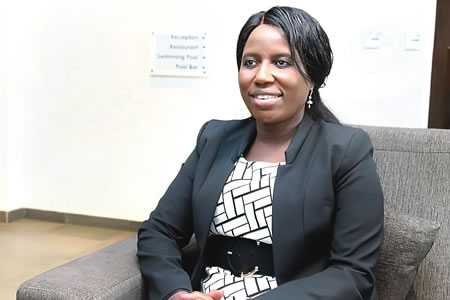
The Executive director of the Partnership for African Social and Governance Research (PASGR), Professor Tade Aina, and the director of Higher Education as well as team leader for Pedagogical Leadership in Africa (PedaL), Dr Beatrice Muganda, recently led a team of 59 resource persons from different parts of the world to Nigeria to deliver a training workshop in pedagogy at the University of Ibadan. Dr. Muganda speaks to MODUPE GEORGE, who caught up with her at the event on the activities of PASGR and the systemic change PedaL is catalysing in teaching and learning in African universities and other issues in education.
Dr. Beatrice Muganda, Director of Higher Education Programme at the Partnership for Social and Governance Research (PASGR)
PASGR is an independent, non-partisan pan African non-governmental organisation that was established nine years ago in Nairobi, Kenya. We work with intricately with academics and researchers, higher education institutions, research think tanks, civil society organisations, business and policy communities both in the region and internationally to enhance research excellence for public policy. We also offer training in pedagogy and research methods. Like now, I’m around for a training in pedagogy at the University of Ibadan (UI) through an initiative known as Pedagogical Leadership in Africa (PedaL). Basically, PASGR has three programmes. The first programme is research. Here, we work with researchers to produce evidence that involves public policy. We hold forums based on the Utafiti Sera (a Swahili word for research policy community) model. Through this platform, we bring a multitude of stakeholders together to discuss research evidence from fresh undertakings or synthesis of existing research. We have achieved a lot ofsuccess in generating appropriate and negotiated policy actions and uptake, for example, underemployment creation in agriculture and agribusiness as well as action for empowerment and accountability in Nigeria; in turning urban cities around in Rwanda; and, in social protection in Kenya. The second programme is professional development and training. This one offers research methods training to tool and retool researchers. So far we have trained 1600 researchers, some are very fresh in the field such as doctorate candidates while others are more experienced but need to renew their skills or broaden exposure to mixed methods. The third programme is the higher education programme which I direct.
Tell us more about the higher education programme of PASGR?
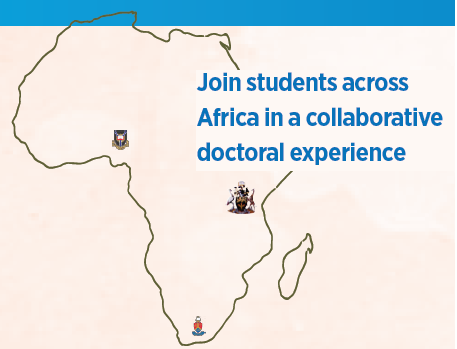
Here, we do a number of things. We mainly collaborate with universities to enhance the quality of education and training in different forms. We rolled out the collaborative Master of Research and Public Policy (MRPP) programme in 2014. The programme was jointly designed by 13 universities in seven African countries and it is being offered in these universities:In Nigeria -University of Jos, University of Ibadan and University of Lagos; University of Serria Leone; University of Ghana; University of Dar es Salaam and Mzumbe in Tanzania; Uganda Martyrs University and Uganda Christian University in Uganda; University of Nairobi, Maseno and Egerton University in Kenya; and, University of Botswana. These universities came together, discussed and agreed on issues, tools, and practices that could be integrated into a programme of public policy and taught to student in a broadly similar way across the continent. So, it is the same programme, awarded by each university and we at PASGR provide intellectual and strategic guidance in programme development; facilitate the network to share ideas, resources and expertise. We also link our local partners to international knowledge, technology, and research networks. So far, we have graduated four cohorts and we will be launching a collaborative Doctoral programme in Public Policy from September 2019 in distinctive hubs.
PASGR works with resource persons from within the continent and beyond in all its programmes. We have drawn on global perspectives, expertise, and innovations from: University of Minnesota (US); The Open University (UK); IDS, University of Sussex (UK); Queens University (Canada); Hertie School of Governance and Free University Berlin, Global Public Policy Network (GPPN) and Global Business Schools Network (GBSN) among others. All through, our vision remains clear: to create a reasonable pool of resource persons within the continent and in each of the participating universities. We are getting there and remain confident that the capacity embedded in each university will offer PedaL trainings to colleagues on a sustainable basis with very little support from outside. We have grown the resource pool gradually by spotting and nurturing talent in each of the PedaL trainings people who are excited, curious and highly motivated and with an innate capacity to deliver. They are identified; mentored, given an opportunity to co-teach with more experienced teaching staff, and thereafter assigned a leadership role.
Why the need for pedagogical leadership in teaching at the university level?
First of all, we need to professionalise teaching at universities. The norm has been to recruit academics with mastery of disciplinary content in Physics, Political Science or whatever other disciplines at a Master’s or doctorate level to teach at the university. Yes, they are good in their contents, but they are not really conversant with the art of teaching and learning which must be acquired and constantly practised. Teaching and learning have their own contents, skills, and competencies, bolts and nuts, so to say. In PedaL, university academics are provoked to question their own beliefs about teaching and learning based on teaching philosophy a well as theories of learning. They are invited to understand the learning needs of students and how to turn around to be more responsive to these needs so as to engender deep learning as opposed to mere regurgitation of facts by students. When learning is developed around a variety of activities, it becomes interesting and is more likely to retain students and curtail the high dropout rates that dog graduate programmes. Fourth, part of the reasons that we are getting graduates who are not properly grounded in their work and who are not adaptive to changing economic conditions is that most of the university teaching staffs dwell on passing on knowledge at the expense of helping students to develop the right attitudes and values as well as 21st century skills such as social consciousness, critical thinking, leadership, teamwork, adaption, problem-solving and creativity. I am glad that this gap is drawing the attention of stakeholders and bilateral organisations. DFID, World Bank and even the European Union have started investing money into programmes for developing the teaching capacities of university teaching staff.
Does your training in pedagogical leadership in any way enhance the curricula of the universities in which you have trained several cohorts?
As a matter of fact, PedaLtraining enriches curricula. For most teachers, what to teach (content) is at their fingertips. PedaL helps them to answer the question – how do I organise what I teach in the most interesting and memorable fashion? PedaL interventions in curricula will vary with context, discipline and even individual university norms. In the process of stretching their imagination, academics may explode some of the course descriptions into comprehensive course outlines. In other cases, they will refine the expected learning outcomes and design activities that lead to the attainment of these outcomes. What we are saying to teachers is, take a second look at your course, and as we work through it, address any conspicuous gaps with regard to linking theory to practice, bringing issues that affect people in their daily lives in your content, using case studies of women and marginalised groups to draw attention to their plight, creating opportunities for projects and other learning activities that stimulate critical thinking and also enable students to develop a range of skills such as communication and presentation. Our interventions are at the level of the course, and will organically enrich the curriculum. Ultimately PedaL influenced courses will not only help students to know a lot of things, but they will also develop the capacity to do a lot of things and to survive in the unpredictable knowledge economy.
It appears you only work with public universities; don’t you have plans to involve private institutions in your programmes since they are all working towards the same goal?
We started with five partner universities for purposes of managing the partnership effectively. However, the partnership provides many entry points into other universities in the host countries. Take ARUA for example, it has opened the door for 16 research-intensive universities to prioritise pedagogy taking cognisance of the fact that it takes good teaching and learning to produce effective researchers. So we are going through networks that we are already working with such as the Regional Universities Forum for Capacity Building in Agriculture to reach a critical number of universities on the continent. For PedaL, we want a systemic change, and the system includes the private, public, faith-based, small and big; we need to move forward together. Already, we are working with a number of private universities; Uganda Martyrs and Uganda Christian, The United State International University in Kenya, Kisubi, Africa Rural University of Uganda, and so forth. We are reaching out to other universities. However, to be able to do this, we need universities to put down some resources, to share the cost of the training. We can only reach the whole continent if we are able to mobilise domestic resources.
How has PedaL been bridging the gap between the older generation of teachers and the new when it comes to imparting pedagogical leadership training across nations?
We’ve had a lot of experience and positive vibes, especially when we started integrating technology into teaching and learning. When we started recording content videos, we were surprised that the more mature and experienced academics were eager to have their voices heard across the continent. Older cohorts of teaching staff are acknowledging the pedagogical transformation: “ I had never worked with technology, but now, I have created my website” said Nobert, an academic at the University of Nigeria. Given their rightful position and a valuable opportunity, the older academics are ready to work with us. The practice of co-teaching in most universities will also lead to rubbing of younger and older minds around innovations. We believe that when the older ones see the value of the transformation, they will come on board slowly. But also the push for accountability that may stem from students along the way. This will provide a powerful stimulus for transforming teaching and learning strategies. Then we have senior champions of the transformation complete with a strong voice and platform: if Emeritus Professor Pai Obanya can do it, who can’t?
How accessible are you to upcoming universities, which are in dire need of PedaL, but do not have the wherewithal? How do you intend to reach out to them?
In every PedaL training mounted, we invite a few participants from such ends. Besides, every hub training organised at a university provides an opportunity for solidifying PedaL in the host country as a number of other universities are invited to participate and special places are reserved for the smaller universities because we want to be inclusive and equitable. For instance, in Uganda, we were able to train six other universities, which were not part of the partnership. These included a small university, the Africa Rural University as well as another university from a post-conflict region, Gulu University. We care so much about the marginalised universities; we want them to get the right exposure. The next hub training is planned for Ghana in August 2019 and we will be replicating the same model.