Tag: PedaL
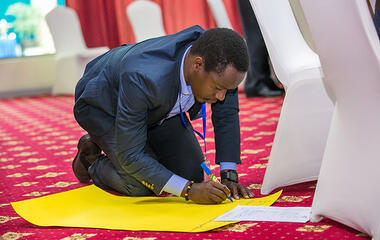
African universities have been faced with challenges of insufficient funding, which have been jeopardising critical programmes, especially in research and innovation.
The spread of COVID-19 and its economic impacts have worsened the situation, leading to massive budget cuts from governments and international donors.
For instance, the announcement by UK Research and Innovation to cut budgets for international development by almost half has left hundreds of research projects, mostly involving universities in the Global South, especially Sub-Saharan Africa, in limbo.
Similarly, Kenya’s Commission for University Education last year reallocated approximately US$2.5 million to COVID-19 response initiatives while the Nigerian government proposed a cut of approximately US$130 million from the education sector to aid its COVID-19 response, according to a survey by the World Bank.
“Even the funds allocated to education in response to the impact of COVID-19 went to the primary [education] level leaving universities and tertiary institutions with so little,” Dr Beatrice Muganda, the acting executive director for higher education of the Nairobi-based Partnership for African Social and Governance Research (PASGR) told University World News in an interview.
According to an analysis of the World Bank published in December last year, Sub-Saharan countries spend 27% and 43% of their government education expenditure on secondary and primary schools respectively, while institutions of higher education receive 21%.
Muganda said the small allocation of funds available to universities primarily targets research programmes.
“Despite the pandemic forcing universities to move online, funding for such [online] programmes in higher education has been highly neglected across Africa,” she added.
Empowering lecturers
Despite the funding cuts and inadequate resources, universities had to move online as institutionalising blended teaching pedagogies for high-quality learning has become critical.
“What is encouraging is that African universities are now raising funds internally to build [the] capacity of educators to move their academic programmes online for now and the future,” said Muganda.
One of the booming programmes being institutionalised by African universities is the pedagogical leadership online training techniques for lecturers to design courses, teach and even assess online under the Partnership for Pedagogical Leadership in Africa (PedaL).
The programme, funded by the UK’s Foreign, Commonwealth and Development Office’s Strategic Partnerships for Higher Education Innovation and Reforms (SPHEIR), began online training for lecturers in July 2020 and has since trained more than 1,100 lecturers from 80 African universities with 40% of trained lecturers being female.
Aimed at catalysing systematic change in teaching and learning in African universities, PedaL is implemented by PASGR in partnership with the UK’s Institute of Development Studies, the University of Sussex, the African Research Universities Alliance, Egerton University in Kenya, the University of Ghana, Nigeria’s Ibadan University, Tanzania’s University of Dar es Salaam and Uganda Martyrs University.
Ubuntu
Driven by the African and PedaL spirit of ubuntu, trained lecturers have volunteered to, in turn, train their colleagues in their various faculties.
“In PedaL, we are a family. We work as a team holding each other to the end,” said Betty Kiema, a lecturer at the Tangaza University College in Kenya.
Kiema, who is also the disability inclusion officer at the college, has, so far, mentored seven colleagues and is still carrying on.
She’s grateful that the programme has transformed her teaching and learning. “I never used to put my learners at the centre of teaching. I would just lecture and do most of the talking,” Kiema said.
But, after the PedaL training, she changed her teaching methods and introduced pedagogies such as case studies and discussion forums and introduced innovative assessment that runs throughout the course period.
“You can confidently tell as a facilitator that, indeed, learning is taking place,” she added.
According to Muganda, PedaL partner universities have been training lecturers continuously with support from SPHEIR.
“Those trained are now training others within and even beyond their universities,” she said, adding that the bulk of the funds used for this training are generated internally with SPHEIR support.
“They are promoting education for social responsibility by donating personal resources such as time, data bundles and fuelling generators in cases of intermittent supply of electric power to support the training of others.”
This generosity and collegiality, Muganda said, is helping African universities to immensely close funding gaps in their efforts to fully embrace blended teaching and learning.
Social responsibility
The academics believe that, through education for social responsibility, they are reclaiming African values of selflessness, togetherness and solidarity that have been under siege by foreign models that are imbued with materialism and greed.
To catalyse the institutionalisation of PedaL, some universities have established centres of excellence such as the Centre for Pedagogy and Andragogy at the University of Nairobi, where peer-to-peer training of lecturers is taking place.
At this centre, the university’s PedaL alumni are already training a team of 144 lecturers. Besides this, the university began a three-week PedaL training for 200 lecturers in May.
The university has already lined up another online training programme for June that is already fully booked, targeting 200 educators.
Maseno University and Tangaza University College, both in Kenya, have joined the University of Nairobi in launching PedaL online training sessions.
Currently, PedaL online training is taking place in 80 universities spread over 10 African countries, including Ghana, Tanzania, Uganda, and Nigeria, with PedaL alumni leading the training.
“Quality in teaching and learning will be sustained cost-effectively and efficiently at the University of Nairobi as we march towards excellence in upscaling online teaching and learning,” said Professor Julius Ogeng’o, the deputy vice-chancellor of academic affairs at the University of Nairobi.
He added that the university strives to institutionalise PedaL teaching and learning strategies that are innovative and help to enhance the quality of teaching.
The University of Ghana’s Centre for Teaching Innovation and the University of Ibadan’s Centre for Excellence in Teaching and Learning are facilitating the institutionalisation of PedaL strategies such as innovative assessment, course design and course facilitation.
PedaL alumni are spearheading activities at these centres and are helping to train their colleagues in enhancing sound pedagogy in online delivery.
Other partner universities also championing PedaL training through centres of excellence include Uganda Martyrs University’s Centre for Continuous Learning and the Centre for Continuing Education at the University of Dar es Salaam.
While addressing participants of Maseno University’s online PedaL training launch meeting in May, the institution’s Deputy Vice-chancellor of Academic and Student Affairs, Professor Mary Kipsat, said that the training is a timely intervention as universities transition to online and blended teaching and learning.
Kipsat encouraged more than 160 lecturers from the university attending the five weeks’ training to complete the course as it would equip them with the relevant skills to enhance quality teaching.
This has been reposted from https://www.universityworldnews.com/post.php?story=20210607161245419

The Board of PASGR is pleased to announce the appointment of Dr Anthony Mveyange as the Executive Director.
Dr Mveyange is a passionate Tanzanian development economist whose research and policy interests include (but not limited to) inequality, poverty, education and health, natural resources, international trade, trade policy, economic growth, and development in Africa.
He has 15 years of experience designing and evaluating projects and programs, policy advisory, and overseeing thematic research-related programs in Africa.
Anthony is joining PASGR from Trademark East Africa (TMEA), where he is a Regional Research and Learning Director overseeing an impactful research and learning portfolio across ten Eastern African countries: Tanzania, Kenya, Uganda, Rwanda, Burundi, Ethiopia, South Sudan, Malawi, Somaliland and Eastern DRC.
As an independent advisor, Anthony supports Porticus Africa in evaluating early childhood development programs in selected slums in Nairobi, Kenya. He also advises on child protection projects in Kenya, Tanzania, South Africa and Zimbabwe.
Before joining TMEA, Anthony was a research economist in the World Bank Development Research Group in Washington DC, the USA. At the Bank, he was a technical team member that produced the World Bank 2017 Global report on Water and the Economy. Anthony was also a technical advisor to Kenya’s Ministry of Health and the National Center for Population Development (NCPD). He also advised Tanzania’s Ministry of Land and Human Settlement on a DFID funded Rural Land Certification Program.
Dr Mveyange is an East Africa Social Science Translation Collaborative (EASST) fellow and a founding member of the Network of Impact Evaluation Researchers in Africa (NIERA) at the United States International University in Nairobi.
He was recently nominated by the World Manufacturing Foundation as among 12 global experts to produce a White Paper on restoring Global Value Chains in the wake of the COVID-19 crisis. He is also a contributor to Africa in Focus at Brookings Institute in the United States.
Dr Mveyange brings a wealth of knowledge and experience in research and evaluation across countries in Africa. He recently concluded a rigorous impact evaluation of AMREF Health Africa’s 10-year Alternative Rite of Passage Programme to curb Female Genital Mutilation/Cutting practices in Kajiado County in Kenya.
Dr Mveyange was also a research cluster lead for a six-country research initiative funded by Bill and Melinda Gates Foundation through the African Research Consortium (AERC) on the COVID-19 pandemic effects across East African countries. He oversaw a team of senior researchers from Tanzania, Kenya, Uganda, Rwanda, South Sudan and Burundi.
In the past, Anthony also consulted for the World Bank Group, Strategic Impact Evaluation Fund of the World Bank, and the United Nations University World Institute for Development Economics Research (UNU-WIDER). He also contributed to the 2015 African Economic Outlook report produced by OECD, AfDB and UNDP.
Dr Mveyange holds a Doctor of Philosophy in Economics from the University of Southern Denmark; a double Master of Arts in Economics from Colorado State University, United States and University of Dar-es-Salam, Tanzania; a Post-Graduate Diploma in Poverty Analysis for Socioeconomic Security from the Institute of Social Studies at Erasmus Rotterdam University, Netherlands; and a Bachelor’s degree in Accounting and Finance from Mzumbe University, Tanzania. Dr Mveyange is currently pursuing a third Master’s degree in Management – Agribusiness at Strathmore Business School, Kenya.
Dr Mveyange’s appointment is effective August 1, 2021.
Mainstreaming gender in higher education research remains low, posing a risk to the realisation of gender equity in education and development goals, experts say.
The experts – drawn from universities, research institutions, government, and the private sector – said that researchers and policymakers need to work in partnership to conduct research that will generate the knowledge needed for decision-making to ensure gender equity in the education sector.
They were speaking during a virtual meeting in March 2021 to mark the launch of the Gendering Education Research Project in Africa. During the meeting, participants discussed pertinent issues of gender in education research in Africa.
The project is aimed at catalysing a community of education researchers and policy actors with innovative and gendered research methods to produce and consume rigorous and credible research evidence for inclusive policy formulation and intervention in education reforms across Africa.
Research capacity
The project, funded by the US-based Spencer Foundation, will be implemented by the Nairobi-based Partnership for African Social and Governance Research (PASGR). In June this year, the project will roll out a three-week online training programme to strengthen participants’ research capacity.
“What is required are critical researchers who approach a gendered education policy research nexus from a critical perspective in terms of their knowledge base and trajectory,” said Professor Kuzvinetsa Dzvimbo, the chief executive officer of the Zimbabwe Council of Higher Education.
Dzvimbo urged policymakers and education researchers to reflect on a gendered and engaged education policy research agenda and discourse practice on the African continent to ensure it is not gender-biased.
“Reflexivity in our work as education policy researchers is critical so that we do not reproduce policy-oriented research that continues to perpetuate the inequalities in our societies, especially those based on gender,” Dzvimbo added.
Additionally, he urged education researchers to be sensitive to critical issues such as power, gender, race and class that largely form the basis of a gendered education research policy nexus that marginalises certain groups in society, especially girls and women.
Shaping inclusive policies
Beatrice Muganda, PASGR acting executive director, said that the project will enable educators to explore and engage with innovative and gendered research methods.
“We shall be able to create and sustain a community of education researchers and policy actors who generate and draw on credible research evidence to shape inclusive public policies across Africa,” she said.
Muganda said that the COVID-19 pandemic disrupted education programmes slowed research and knowledge production while aggravating inequalities.
She called for a commitment to the calls by key global development blueprints such as the AU’s Agenda 2063 and the United Nations’ Sustainable Development Goals that call for leaving no one behind.
“It is, therefore, our sacred responsibility to respond effectively to this call. We need decisive evidence, informed policies and programmatic interventions to redress this situation and increase educational outcomes for all groups,” said Muganda.
She added that drawing the attention of researchers and policymakers to the right gendered research questions and working together to generate a body of evidence is the way to go to achieve inclusive policies.
Counter hegemony
Eunice Kamaara, a professor of religion from Moi University in Kenya, said that mainstreaming gender in education research is a process that starts from research conception and runs through the entire research process.
“Addressing gender issues in education is not merely looking at disaggregated data but addressing all aspects of gender during the entire research process,” she said.
Dzvimbo called for the development of gendered education research policies that reverse stereotypes of girls and women as inferior to boys and men.
“This is one of the best ways to develop a counter-hegemonic discourse to a gendered education policy research agenda on the continent which continues to reproduce inequalities based on gender,” he said.
Dzvimbo said that social science policy-oriented research has the potential to provide lasting solutions to issues of gender discrimination that emerge in the context of Africa’s transformation quest but only if “approached from a perspective that is transformative”.
This has been reposted from https://www.universityworldnews.com/post.php?story=20210407090336570
Summary
This study identifies eight attributes of female leadership that has contributed to the success of the Pedagogical Leadership in Africa (PedaL) partnership, one of three SPHEIR projects addressing pedagogical reform. PedaL is a partnership between higher education institutes in Ghana, Kenya, Tanzania, Uganda and the UK. Academics from these partner institutions have trained and established a network of teachers in African universities to transform graduate education by embedding innovative pedagogy within graduate social science programmes. The partnership is led by Dr Beatrice Muganda of Partnership for African Social and Governance Research (PASGR) in Nairobi, Kenya. The PedaL approach represents a systemic shift from dominant traditional teaching models to more participatory, student-centred approaches. It is gender-sensitive and subject content integrates an analytical lens on power and inequality. Dr Muganda’s leadership approach reframes what it takes to be a successful leader, to manoeuvre skillfully and to bring power on side, so as to expand opportunities for students to contribute to inclusive social and economic development.
Click on Briefing Note here
Contact person: Lauren Wesonga- lwesonga@pasgr.org
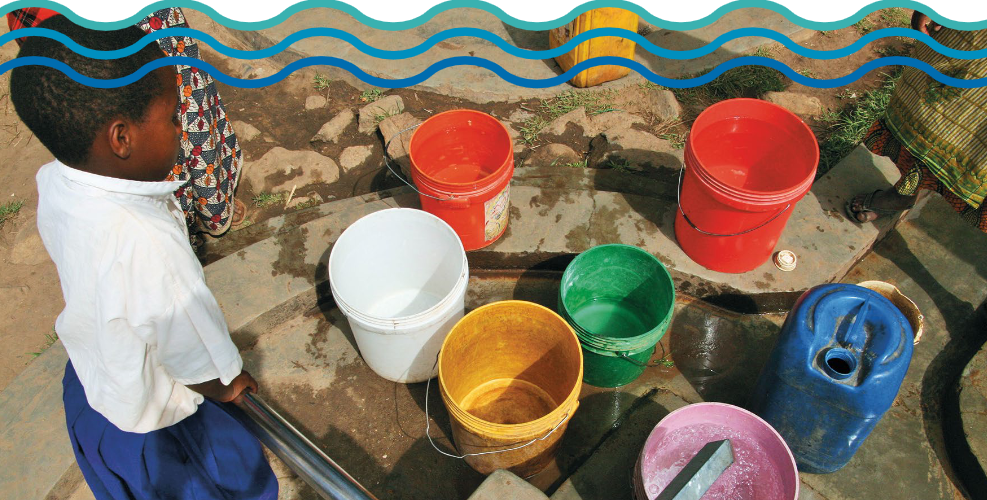
Accountability for Water is a new programme of action & research to improve water governance & water service delivery. Too often good policies, wise laws and promising programmes have failed because of weak accountability.
To harness the potential of stronger accountability we need to know ‘what works and why?’ in different water management contexts.
We invite you to join us and support our three goals for water security:
- Knowledge generation: Sector leaders supported to do high-value research
- Outreach and uptake: Sharing findings through meetings, publications and online
- Ensuring legacy: Developing strategies, support networks and implementation plans
Become a Host Organisation
Any organisation with an interest in accountability can be a host organisation-government agencies, utilities, civil society or researchers. With a PRF research grant you can support a member of your team to complete research on your priority accountability issue.
Become a Professional Research Fellow
Fellows will be professionals who sit within a host organisation who are capable of carrying out original research, with training & mentoring support from a wide range of organisations and experts including leading researchers. Learning Partners are welcome to join. Contact us to receive regular updates and share your learning with us.
Our 9-week remote-learning masterclass on Accountability for Water begins on 16th November 2020. Participants will receive a certificate of attendance and coaching to develop a Research Fellowship Proposal for an 18 month research grant. To register interest and find out more, and to register for our launch event on 5th November 2020 (online -2pm EAT):timbrewer@waterwitness.org
The University of Pretoria’s School of Public Management and Administration (SPMA) will offer a new PhD programme in Public Policy, and prospective students will be able to apply for it in 2021.
This development comes as a result of engagements between the SPMA and the Partnership for African Social and Governance Research (PASGR) in 2019, when UP staff met with Dr Beatrice Muganda, Dr Pauline Ngimwa and Executive Director Professor Tade Aina from PASGR.
“The University has recently signed a Memorandum of Agreement with PASGR and we believe this will just strengthen the very good relationship the SPMA has formed with PASGR over the last year,” says Prof Natasja Holtzhausen, SPMA PhD coordinator.
One of the discussion points was a PhD programme with a strong policy focus. With the support of the Faculty of Economic and Management Sciences and University management, Prof Holtzhausen and SPMA colleagues wrote a proposal that was submitted to all the relevant university committees to obtain permission for a degree that specialises in public policy. Top prospective students from across the continent were targeted. The Carnegie Foundation made 15 full scholarships available to fund exceptional PhD students. These 15 scholarships were shared among the three universities that were piloting the PhD, these being the University of Ibadan in Nigeria, the University of Nairobi in Kenya, and the University of Pretoria.
The first students, mainly from Uganda and Nigeria, enrolled at UP in January 2020, but under the PhD Public Administration and Management programme. The PhD degree in Public Policy has since been approved by Senate and as of 2021, prospective students will be able to apply for this specific degree.
This has been reposted from https://www.up.ac.za/school-of-public-management-and-administration/news/post_2929457-spma-to-offer-new-phd-in-public-policy
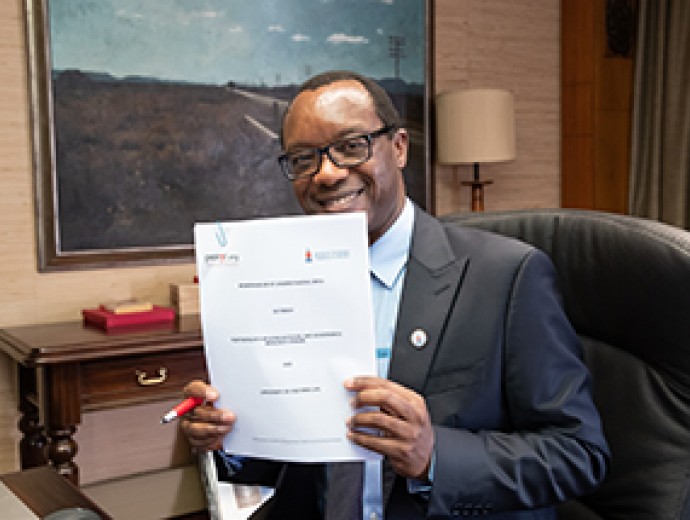
University of Pretoria (UP) Vice-Chancellor and Principal Professor Tawana Kupe and Partnership for African Social and Governance Research (PASGR) Executive Director Professor Tade Aina formalised the strategic partnership between the two institutions during a virtual signing ceremony of a memorandum of understanding (MoU) on Monday, 21 September.
PASGR is a pan-African non-profit organisation established in 2011 and located in Nairobi, Kenya, with engagements in over 25 African countries focused on enhancing research excellence in governance and public policy for society’s overall well-being. The strategic partnership between UP and PASGR will be anchored by the collaborative Master’s Programme in Research and Public Policy and the Doctoral Programme in Public Policy offered together with the University of Ibadan and University of Nairobi. Collaboration will also focus on research and policy training for early and mid-career researchers, and collaborative research grants on important policy issues in Africa.
The partnership with PASGR is very much aligned to UP’s strategic goal to become the leading African-global university. This strategic goal seeks to develop a globally competitive and recognised research institution responsive to societal challenges, particularly in Africa. UP’s four transdisciplinary platforms, (i) the Future Africa Campus and Institute, (ii) Javett Art Centre, (iii) Engineering 4.0, and Innovation Africa@UP will play a leading role in this regard. For the UP-PASGR collaboration, Future Africa will be an instrumental science-policy platform for hosting transdisciplinary teams of researchers and practitioners, including policymakers from the continent and the rest of the world in the co-creation of knowledge to address complex governance and public policy challenges facing Africa.
During the virtual ceremony, Prof Kupe noted that “this MoU provides a visible manifestation of agreed strategic collaboration and a shared commitment to the leveraging of our collective intellectual capital, expertise, resources, and capacities in the advancement of our well-aligned visions and strategic priorities”.
PASGR Executive Director Prof Aina added that the MoU “is also a reinforcement for building the next generation of public policy researchers and leaders in Africa”.
This has been reposted from https://www.up.ac.za/news/post_2924288-up-formalises-strategic-alliance-with-the-partnership-for-african-social-and-governance-research-pasgr
The PedaL project is a platform to revolutionize the teaching narrative by updating the pedagogical skills of African university teachers. The PedaL integrated model comprises six major components, namely, pedagogical strategies, educational foundations, technology-enhanced teaching and learning, curriculum and learning design, pedagogical leadership practice, and assessment. PASGR targets creating a vibrant African social science community that addresses the continent’s public policy issues. Read more
As online and blended teaching and learning become part of the new normal, the need for specialist training of academic staff is being realised.
Last month, a three-week course designed by the Partnership for African Social and Governance Research (PASGR) and intended to teach lecturers how to design, prepare and assess online courses, attracted 100 lecturers from universities in Botswana, Ghana, Kenya, Nigeria, South Africa, and Uganda.
The pilot training was part of the Partnership for Pedagogical Leadership in Africa (PedaL) programme. PedaL is one of the nine partnerships of the United Kingdom’s Strategic Partnerships for Higher Education Innovation and Reforms, aiming to catalyse systemic change in teaching and learning in African universities.
The initiative has trained over 1,100 academics from 60 African universities and is implemented by PASGR in partnership with the African Research Universities Alliance, Nigeria’s University of Ibadan, University of Ghana, Uganda Martyrs University, Tanzania’s University of Dar es Salaam and Egerton University in Kenya.
Students at the centre
Audited by the Commonwealth of Learning, INASP (International Network for the Availability of Scientific Publications), and the Association of Commonwealth Universities, the online course provided a platform for academics to share knowledge and ideas on how to improve pedagogy and ensure that students are at the centre of learning through online or blended learning.
The facilitators of the pilot training used a range of teaching tools such as case studies, simulations, concept maps, role plays, and authentic tasks to spur experience sharing, critical thinking, problem-solving, and collaboration among participants.
Dr. Beatrice Muganda, the director of the Higher Education Programme at PASGR, said the design of the course enabled lecturers and facilitators to work collaboratively.
“The programme to deliver courses online must be exciting for students in the way they are structured so as to meet the desired learning outcomes. The strength of PedaL is that everything we do is transferable to the classroom, whether physical or virtual,” Muganda told University World News.
Muganda said that the training would bring about the “transformation that we hope translates into learning”. However, she said the lecturers will still have a month to access the online resources and consult the course facilitators so as to increase the depth of learning.
Technology as facilitator
Contrary to some fears, online teaching requires more lecturer engagement than before, she said, referring to concerns that technology could replace teachers. “Technology won’t do everything for us but may make our work easier, even in terms of evaluating students,” Muganda said.
She added that even after the official end of the online pilot training programme, academics continued with self-paced learning, uploading courses at 3 am. This, she said, implies that the continent is creating a new cadre of academics who spend much of their time planning for their students.
“Before the coronavirus pandemic, everybody had something to say about online and blended teaching but no institutions put in place the machinery for online learning,” said Professor Tade Aina, the Executive Director of PASGR.
Aina, who formerly was the programme director of the Higher Education and Libraries in Africa Program for the Carnegie Corporation of New York, said PASGR was already considering online and blended learning, especially for the PedaL programme, before the pandemic hit.
Increased access to pedagogical transformation training
“We were keen on this so as to increase access to our pedagogical transformation training in the continent … This implies that physical training could not be sufficient to reach as many academics as possible,” Aina told University World News.
Aina urged academics to ensure that technology-enhanced learning was simple, engaging, transferable, and comprehensive. He said the positive responses from participants to the pilot training show that online and blended learning is inevitable in Africa, despite challenges such as blackouts and unreliable internet coverage.
“The most important thing is getting ways to support lecturers and students for online learning. It’s work in progress; we shall have errors and hitches but we will finally get there,” Aina said.
Fourth industrial revolution
He challenged African universities to prepare for a culture of online delivery and assessment, arguing that the pandemic was hastening Africa into the fourth industrial revolution.
“There will be a high dependence on machine learning and artificial intelligence. University leadership should be preparing for this by completely reforming our research and development so that we are not just consumers but also innovators,” said Aina.
Khaemba Ongeti, associate professor in the department of curriculum and instruction at Moi University’s School of Education in Kenya, said the work of the lecturer had expanded with the emphasis on remote teaching and learning.
“Online teaching will also require lecturers to constantly review what they are doing to ensure that students’ interest in learning is kept high,” said Ongeti, adding that supporting learners will be critical to achieving desired learning outcomes.
Participants said the course was an eye-opener with regard to revealing the tools available online to help them.
“I join all participants in expressing my profound gratitude to PASGR and her partners for this opportunity to acquire 21st-century skills,” said Dr. Ndidi Ofole, one of the trainees and a senior lecturer from the University of Ibadan. Her colleague, Sella Terrie Jwan from Moi University, said the training was taxing but fulfilling, leaving her empowered to move with speed and start practicing online teaching.
This has reposted from https://www.universityworldnews.com/post.php?story=2020070716115125