Title: Programme Assistant (Professional Development, Training and Fellowships Programme)

Reports to: Programme Manager

Location: Nairobi, Kenya

 Open to: Kenyan Residents and Nationals

Duration: 1 year contract (Renewable)

Application deadline: Wednesday, July 8, 2020 (1700hrs Kenyan Time)

Background

The Partnership for African Social and Governance Research (PASGR) is an independent, non-partisan pan-African not-for-profit organisation established in 2011 and located in Nairobi, Kenya.  PASGR is working in more than 14 African countries to enhance research excellence in governance and public policy that contributes to the overall well being of the citizens.  Our vision is ‘a vibrant African social science community addressing the continent’s public policy issues’.

In partnership with individual academics and researchers, higher education institutions, research think tanks, civil society organisations, business and policy communities both in the region and internationally, PASGR supports the production and dissemination of policy relevant research; designs and delivers short professional development courses for researchers and policy actors; and facilitates the development of collaborative higher education programmes and manages fellowships to support scholarship and research.

Professional Development, Training and Fellowships is one of the three core PASGR’s programmes responsible for research capacity strengthening and administration of fellowships.

 Key Responsibilities

  1. Training Support
  • Support the training function of the programme including marketing of the programme, call for application preparation, selection process, invitations for participation, source for training venues, instructors’ logistical supports including travels and accommodation, and training materials preparation.
  • Support to the digitization of the PDT courses and delivery of online courses.
  • Support to the management and capacity strengthening efforts of the body of instructors

2. Coordination of Fellowships

  • Provide support to the Programme Manager and the Higher Education Programme team in the coordination and implementation of fellowships, including selection of fellows.
  • Assist with the implementation of the fellowships’ activities including the Joint Annual Academic Seminars.
  • Manage timely payment of fellowships related costs.
  • Facilitate and manage communication with fellows.
  • Support donor engagement by preparing and availing documents required for grant management and reporting.

3. Resource Mobilization

  • Identify and disseminate funding opportunities to programme teams.
  • Working with Programme teams, participate in the entire proposal development of identified funding opportunities.

4. Programme Implementation Support

  • Support and carry out monitoring and evaluation of the Programme activities.
    • Provide support in the preparation and tracking of PDT budgets, procurement of services, processing of payment requests and budget reconciliations.
    • Take charge of all programme’s documentation including print and electronic filing to ensure safe storage and easy retrieval of PDT information. This also includes maintaining of an updated contact database.
    • Set up Programme’s virtual and physical meetings including taking minutes and ensuring that agreed action points are well documented and actioned.
    • Prepare programme’s reports, service contracts, presentations, including editing and formatting.
    • Receive and respond to general enquiries about the Programme, as well as to requests from partners and collaborators.
    • Handle all logistical support for training workshops and meetings.

Competences

  • Initiative, creativity, enthusiasm, maturity, tact and high sense of responsibility.
  • High level of computer literacy.
  • Ability to learn new tools, tasks and skills quickly.
  • Attention to detail.
  • Excellent organisation skills.
  • Professionalism and adherence to deadlines.
  • Excellent oral and written communication in English.
  • Ability to work independently, set priorities, juggle tasks and meet tight deadlines.
  • Excellent interpersonal skills and ability to establish and maintain effective working relations with people in a multicultural and multi-ethnic environment.

Qualifications and Experience

  • Masters in any of the Social Sciences, Education or related disciplines such as Business, Communications and Development Studies.
  • Post qualification experience in any of the following areas preferably with an international or similar regional/ national organization would be an advantage: fundraising and proposal writing; coordination of training programmes; programme management, Monitoring and Evaluation; advocacy; policy engagement.

How to Apply

Applications should be sent to info@pasgr.org by July 8, 2020. The email must include: a CV and a cover letter.

Background

Pedagogical Leadership in Africa (PedaL) is a partnership of eight institutions whose aim is to catalyse systemic change in teaching and learning in African universities. The Partnership for African Social and Governance Research (PASGR) is the Prime Agency, leading 7 other partners including Alliance for Research Universities in Africa (ARUA), Institute of Development Studies (IDS) of the University of Sussex, UK; as well as five implementing partner universities. The implementing partner universities are namely, the University of Ghana in Ghana, University of Ibadan in Nigeria, University of Dar es Salaam in Tanzania, Egerton University in Kenya and Uganda Martyrs University in Uganda. PedaL was designed around four phases, namely planning and delivery preparations; training and graduated roll out of PedaL in social science programmes of 5 core partner universities; sustainability planning and scale-up; and finally evaluation as the last phase. The project has been in operation since July 2017 and is expected to end in September 2021.

Purpose of the Assignment

PedaL embodies three key interventions: training; application of newly learnt teaching and learning methods (PedaL pedagogy) to deliver social science programmes; and leadership that entails influencing others to replicate PedaL for greater impact. The consultant/evaluator will lead the evaluation of PedaL with the view to provide information and knowledge about what has been achieved, how, and what lessons to derive from this, for the partnership and other stakeholders. The evaluation will go beyond impact in line with the PedaL theory of change to establishing the mechanisms under which the results have been achieved. The evaluation will further seek to understand what elements of PedaL have contributed significantly to the transformation of teaching and learning in the target higher education institutions; and how positive relationships and trends that have emerged can be sustained and enhanced.

Findings and conclusion from the evaluation will be shared with the PedaL and SPHEIR partnerships as well as wider interested groups including higher education institutions, networks, and knowledge systems in Africa and beyond.

Scope of the Work

The evaluation should review all aspects in line with the PedaL theory of change from its inception in May 2018 to date. The consultant will be expected to implement a robust evaluation approach that would yield defensible and credible findings. The project evaluation will cover the quality and quantity of PedaL outputs spanning all university programmes that have implemented PedaL across the continent. The teaching staff trained and others that they have engaged as well as the students who have participated in target PedaL programmes will also be engaged; so will other stakeholders such as potential employers and policymakers at different levels. PedaL has trained over 1,000 teaching staff from the five implementing partner universities (University of Dar es Salaam, Egerton University, University of Ghana, University of Ibadan and Uganda Martyrs University) and more than 50 other African universities. PedaL evaluation will be aimed at establishing the impact of project interventions specifically on 25 graduate social science programmes of the five universities, as well as the spillover effect on other programmes within and without the core universities. The focus will also be on the range of outcomes leveraged from PedaL and the extent to which these outcomes can be sustained to create the expected impact. The evaluation, which is to begin in August, is estimated to last for a maximum of 5 months, with the final report expected out by March 2021.

Evaluation Objectives

The evaluation will be aimed at establishing, among other things the effectiveness, efficiency, sustainability, and impact of PedaL:

  • Effectiveness – whether PedaL is producing the expected results;
  • Efficiency – whether PedaL outcomes were achieved with the least possible resources;
  • Sustainability – whether PedaL outcomes can be maintained over a long period of time; and,
  • Impact – whether the benefits accruing from PedaL outcomes extend beyond the direct beneficiaries in a way that influences the higher education ecosystem in Africa.

The consultant will need to explore intended and unintended outcomes for purposes of accountability and, more importantly, for learning within and beyond the partnership.

Accordingly, the objectives of the evaluation are to:

  1. Independently verify (and supplement where necessary), the record of achievement of the project as reported through its annual reports and defined in the project results framework;
  2. Analyse the extent to which factors that have influenced the achievement of project outcomes can be leveraged for the sustainability of PedaL;
  • Document lessons learnt;
  1. Suggest recommendations for improving the programme’s design and implementation for scale-up and sustained impact.

Evaluation Criteria

The evaluation will use these five standard criteria: relevance, effectiveness, efficiency, impact, and sustainability.

Method of the Evaluation

The impact of PedaL is expected to be assessed through teaching staff and students’ perceptions of learning experiences and assessment of student learning outcomes. These will be explored through teaching staff and student surveys, review of teaching and learning materials, review of student and teaching staff artifacts as well as in-depth case studies, and other process tracing methodologies. Although a theory-based approach is preferred for PedaL evaluation, the consultant will be expected to apply a mixed-methods approach to allow for triangulation. Whichever the methods applied, the consultant should be able to explore how different dimensions of the project (such as structures and processes) work together to produce the desired outcomes and impact as well as test the underlying assumptions. It is envisaged that beyond measuring results, it will be possible to understand how and why these results have/have not been achieved, implying the need for an adaptive methodology. The evaluation methodology may, therefore, include contribution analysis (as a mandatory method), interviews, desk reviews, case studies, change/impact stories, case studies, institutional visits, focus group discussions, key informant interviews, and analysis of administrative data, among others.

The evaluator will be expected to include in the inception report a detailed statement of the method of evaluation showing how each of the evaluation objectives and questions will be answered.

Roles and Responsibilities

PedaL partnership will be responsible for:

  • Availing the relevant baseline data and other relevant documents;
  • Facilitating access to respondents;
  • Periodic review of work in progress and provision of feedback;
  • Dissemination and utilization of the results of the evaluation;
  • Implementation of quality checks and controls designed in collaboration with the consultant to ensure the quality of the information being collected during the evaluation process.

The consultant will be responsible for:

  • Development of a detailed work plan for designing and executing the evaluation;
  • Preparation of the design for the evaluation;
  • Refining the proposed methodology for answering the evaluation questions identified;
  • Deciding on the detailed evaluation questions and data sources and instruments to be used for addressing them;
  • Designing the data collection instruments to capture all the variables of interest;
  • Working collaboratively with PedaL Team Leader, Senior Monitoring, Evaluation and Learning (MEL) Officer and university MEL Leads to manage the evaluation as it unfolds;
  • Implementation of quality checks and controls designed in collaboration with PedaL evaluation steering group to ensure the quality of the information being collected during the evaluation process;
  • Development of outline of the final report for review by the members of PedaL evaluation steering group;
  • Conducting data analysis (both qualitative and quantitative) and writing draft and final reports from the analysed results; and,
  • Ensuring that the data is maintained and stored in a manner that is fully confidential; all collected data should only be made available to the responsible persons within the PedaL partnership.

Deliverables

  • An inception report that clarifies the consultant’s understanding of the TOR and demonstrating how the evaluation questions will be answered including the proposed methods, sources of data and data collection tools and evaluation work plan, and how data analysis will be triangulated for validation of the findings;
  • Draft evaluation report;
  • Presentation of findings to the PedaL partnership;
  • A summarized PowerPoint presentation of the findings;
  • Final evaluation report with clear findings and recommendations presented in a publishable format for internal use as well as dissemination to stakeholders including to SPHEIR; and,
  • An abridged version of the report for quick reference and consumption.

Proposed Timelines

The expected timelines for delivery will be:

DeliverableDescriptionsTimeframes
An Inception ReportThe inception report should capture the intervention logic based on desk reviews, the ToR, and other project documents. The consultant’s initial thoughts on the evaluation approach design should also be included.10 working days from the time the contract is awarded.
A detailed proposed evaluation planA comprehensive plan that captures the timings of evaluation tasks and the associated deliverables including, data collection, analysis, reporting, and dissemination of the evaluation results.1 working day
Managing data collectionExecuting the proposed evaluation plan so to collect data that meets all the data quality criteria of validity, integrity, precision, reliability, and timeliness.30 working days
  
Data analysisData cleaning, processing, and analysis in response to the evaluation questions and objectives.10 working days
A draft Evaluation ReportA complete draft evaluation report should be available to be discussed among the relevant stakeholders in order to provide comments.14 working days
Final Evaluation ReportThe report should include, but not limited to the following content areas:Executive summaryTable of contentProject descriptionEvaluation purposeEvaluation methodologyMain findings Lessons learnedConclusion and recommendationsAnnexes (including a list of key informant interviewed/consulted during data collection, a record of interviews and focused group discussions conducted, etc.)The final evaluation report should be submitted by March 5, 2021.

Required Expertise & Qualification

  • At least a master’s degree in a relevant area (education, project management, impact evaluation, etc.);
  • Prior experience in design and leading evaluation, data analysis skills, and knowledge of the regional and institutional context, and have technical competence in the higher education sub-sector;
  • A minimum of 5 years of practical experience in evaluation research spanning qualitative and quantitative suite of designs;
  • Working experience in Africa is desirable;
  • Working experience with higher education institutions;
  • Excellent and proven analytical skills;
  • Excellent and proven English writing skills; and,
  • Excellent organizational and communication skills, ability to prioritize and work with minimum supervision.

Reporting Requirements

The consultant will work in close consultation with PedaL Senior Monitoring, Evaluation, and Learning Officer, who will backstop on all the issues of planning, execution, and reporting of the evaluation findings.

Budget and Payment Terms

The proposal should include a detailed budget in GPB, specifying all the costs, and any applicable taxes required to execute the scope of work and obtain the deliverables. The consultant should provide a breakdown of costs by tasks (for example, data collection, data cleaning, data analysis, report preparation, etc.). Payments will be phased based on tasks and approved deliverables.

Application Procedures

Interested applicants who meet the job requirements and qualifications and with the right personal attributes are invited to complete and submit the following:

  1. A technical proposal answering to the TOR;
  2. Financial proposal;
  3. A brief description of the evaluator outlining recent experience in similar assignments (three assignments over the past four years);
  4. At least three references of similar assignments;
  5. At least 2 samples of work similar to this assignment;
  6. An up-to-date CV.

All applications should be sent to PASGR info@pasgr.org by June 30, 2020. Quote “EOI -PedaL Evaluation” in the subject line of your email.

Click here to download the document in PDF.

Keynote Speakers:
Tade Akin Aina Executive Director, Partnership for African Social Governance and Research (PASGR), Nairobi, Kenya.
Tatiana Carayannis Director, Conflict Prevention and Peace Forum, Understanding Violent Conflict, China-Africa Knowledge Project, Social Science Research Council (SSRC), Brooklyn, USA.
Bhekinkosi Moyo Director, The Centre on African Philanthropy and Social Investment (CAPSI), Wits Business School, Johannesburg, South Africa.
Moderators: Maribel Morey & Lars Trägårdh ESBH, Center on Civil Society Research Philanthropy and Democracy Program
the FOURTH annual seminar on philanthropy:
VIRTUAL Seminar Thursday, MAY 14, 2020 10:00-15:30, Stockholm Time

For Further Seminar Details, Please Register by Emailing maribel.Morey@esh.se

Introductions
10.00-10.05 Welcome by Magnus Karlsson, Head of the Center on Civil Society Research, ESBH   10.05-10.10 Introduction by Lars Trägårdh, Director of the Philanthropy and Democracy Program at ESBH   10.10-10.20 Introduction by Maribel Morey, HistPhil co-editor and Guest Researcher, Philanthropy and Democracy Program at ESBH

I. Philanthropic Practices and Philanthropy Research in Africa
10.20-10.45 Keynote I: Bhekinkosi Moyo, The Centre on African Philanthropy and Social Investment (CAPSI), Wits Business School, Johannesburg, South Africa: Philanthropy in Africa Today   10.45-11.00 Q&A with Bhekinkosi Moyo led by Tade Akin Aina, Partnership for African Social Governance and Research (PASGR), Nairobi, Kenya
11.00-11.25

Keynote II: Tade Akin Aina, Understanding African Philanthropy and Philanthropy in Africa
11.25-11.40 Q&A with Tade Akin Aina led by Bhekinkosi Moyo   11.40-12.15 Q&A with Tade Akin Aiana and Bhekinkosi Moyo led by Maribel Morey, ESBH
12.15-13.30 Break
II. International Civil Society and Africa   13.30-14.00 Keynote III: Tatiana Carayannis, Social Science Research Council (SSRC), Brooklyn, USA, The Third United Nations
14.00-14.15 Q&A with Tatiana Carayannis led by Lars Trägårdh, ESBH
14.15-14.35 Tade Akin Aina, Africa and International Order beyond Neoliberalism   14.35-15.00 Q&A with Tade Akin Aina led by Tatiana Carayannis

III. Closing Remarks
15.00-15.20 Bhekinkosi Moyo, Some Final Reflections on Philanthropy in Africa
15.20-15.30 Final Q&A with virtual audience led by Maribel Morey

the Fourth annual seminar on philanthropy
F o r F u r t h e r S E m i n a r D e t a i l s , P l e a s e R e g i s t e r b y E m a i l i n g m a r i b e l . M o r e y @ e s h . s e

The maiden edition of The Policy Forum programme held on Monday, the 28th of October, 2019; by 12 noon prompt at Four Points by Sheraton, Oniru Chieftaincy Estate, Victoria Island, Lagos.

Of all the 5 growth drivers – strong institutions, human capital, entrepreneurship, culture, and public policy, public policy provides the framework for the development of all four, if driven by a leadership culture that prioritizes societal needs over pecuniary self-interests. Therefore, The Policy Forum shall attempt to position public policy making in its rightful pride of place as an integral part of Nigeria’s development trajectory by providing a space for policymakers to dialogue and exchange views with policy practitioners, diplomats, non-state actors, and other stakeholders on ‘a wide range of policy-centric topics.

Registration

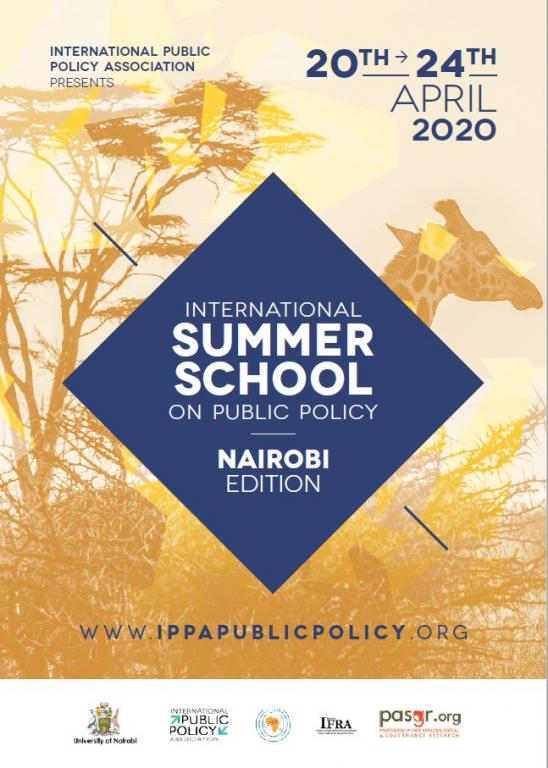
Following the successful organization of the first IPPA Summer school on public policy in the African continent (Yaounde 2019), IPPA is pleased to introduce the second edition, this time in Nairobi, Kenya.

The International Summer School on Public Policy – Nairobi Edition 2020 will be organized in partnership with the University of Nairobi and the Partnership for African Social and Governance Research (PASGR), and with the financial support of the African Training and Research Centre in Administration for Development (CAFRAD),

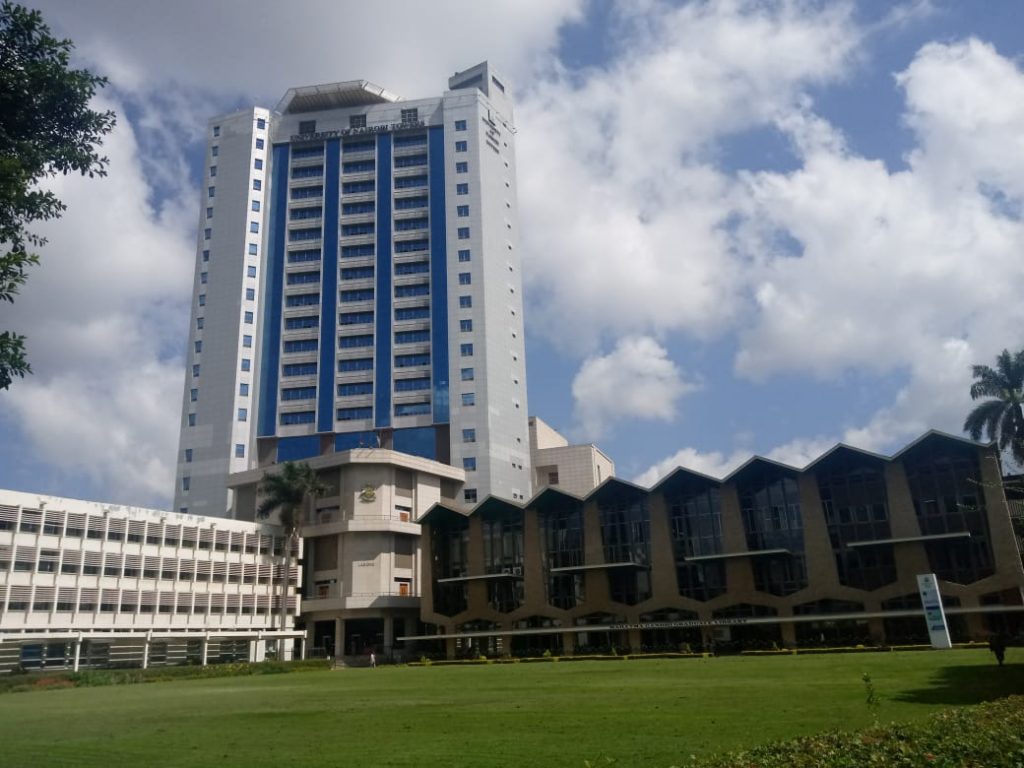
and The French Institute for Research in Africa (IFRA). The school will be held from 20 – 24 April 2020with a roundtable and first-day lecture at the University of Nairobi main campus. All other sessions of the school will be located at the Corat Africa hotel.

The Summer School aims at providing advice and knowledge on Public Policy theories, concepts, and methodologies to analyze public policy to Ph.D. students and early career researchers.

The first round of Call for Applications will be open from 4 – 28 February 2020. The result of the applications will be communicated on 2nd March 2020. The second round of Call for Applications will be open from 2 until 16 March 2020 on a rolling admission basis, and depending on availability.

The registration for the accepted applicants will be open from 2 – 16 March 2020. 

The school will bring three acclaimed scholars of the field of public policy namely, Prof. Grace Skogstad (University of Toronto), Prof. Guy Peters (University of Pittsburg), and Prof. Philippe Zittoun (University of Lyon). It will offer each participant the opportunity to follow:

  • Roundtable and lecture 
  • joint lecture of 1 hour every morning proposed by different international scholars addressed to all the participants
  • course of 2 hours every morning proposed by different international scholars addressed to a small group of participants of 10 to 15 participants
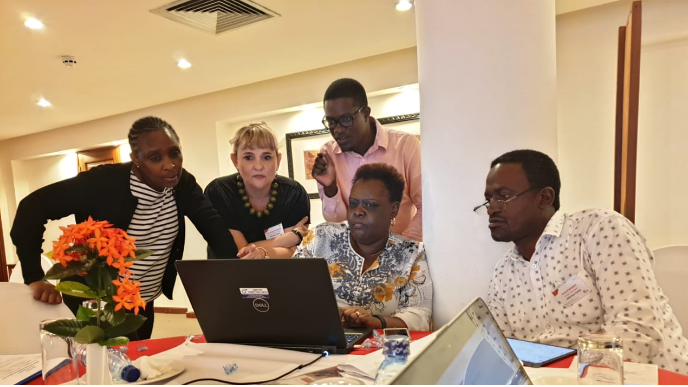
  • Workshop groups in the afternoon to discuss the research project of each participant addressed to small groups of 10 to 15 participants

FCDO-World Bank-UNHCR

“Building the Evidence on Protracted Forced Displacement: A Multi-Stakeholder Partnership”

– YOUNG FELLOWSHIP PROGRAM –

Up to 10 Fellowships, July 2020-June 2021 Deadline for applications: March 6th, 2020.

Note: File updated on February 21st with the revised application link.

To download the PDF version

Background

In 2016, the UK Foreign, Commonwealth & Development Office (FCDO) partnered with the World Bank and the United Nations High Commissioner for Refugees (UNHCR) to establish a research program on forced displacement called “Building the Evidence on Protracted Forced Displacement: A Multi-Stakeholder Partnership”.  The objective of the program is “to improve the wellbeing of the forcibly displaced and of host communities by improving global knowledge on the effectiveness of policies and programs that target these populations”. The program is administered by the Fragility, Conflict, and Violence (FCV) department of the World Bank and currently includes 5 pillars: 1) Research on global questions related to forced displacement in the education, health, social protection, and jobs sectors; 2) Impact evaluations of programs administered to refugees and internally displaced persons (IDPs); 3) A research program on gender and forced displacement; 4) Research on forced displacement on selected topics not covered under pillars 1-3 and 5) A Young Fellows program for post-doc scholars interested in research on forced displacement. The first cycle of the Young Fellows program was launched in June 2018 and saw the participation of 10 African scholars who worked at the World Bank and the UNHCR for a period of 12 months between July 2018 and June 2019. The program proved to be a success as all scholars were able to produce high-quality research and subsequently found employment in international organizations, including the World Bank and the UNHCR. Based on the experience of this first cycle, the FCDO-WB-UNHCR research program on forced displacement is now launching a second cycle opened to young scholars globally. The program is offering up to 10 new fellowships for the period July 1, 2020 – June 30, 2021. Fellowship The fellowship consists of a Short-Term Consultancy (STC) contract with the World Bank for 150 days to be used over the period of one fiscal year between July 2020 and June 2021. This is the maximum number of days allowed by the World Bank’s STC rules and does not preclude fellows from holding other positions or consulting contracts with other organizations. Consulting fees are based on education and work experience as established by the World Bank STC regulations.  The World Bank will also provide one return ticket in economy class between the home country and the location of the consultancy. Fellows will be assigned to a unit in the World Bank or the UNHCR and a supervisor within the unit. The location of the consultancy is agreed between the fellows, supervisor, and the program’s administrator. This location can be in World Bank or UNHCR headquarters, field locations, or anywhere else provided is agreed with the relevant parties. Each fellow will work with existing data available at the World Bank, UNHCR, or elsewhere and is expected to produce two working papers during the course of the fellowship. The topic of the papers is decided jointly by the fellow, supervisor, and the program’s administrator and is expected to relate to the World Bank or UNHCR operational work. Good quality papers will be published in the World Bank Policy Research Working Paper series and these papers are expected to be submitted to peer-reviewed journals following publication in the WP series.

Eligibility

Mandatory requirements:

  • A completed Ph.D. in Social Sciences by June 30, 2020 (Economics, Statistics, Politics, Sociology, etc);
  • Strong quantitative skills (Statistics, Econometrics, Machine Learning, Impact evaluations skills);
  • 35 years of age or below by December 31, 2020;
  •  Citizen of a low- or middle-income country as defined by the World Bank;
  • A proven interest in forced displacement issues.

Priority will be given to scholars with:

  • A Ph.D. thesis addressing forced displacement questions;
  • Personal forced displacement experiences (Refugees, Internally Displaced Persons and other scholars who have personally experienced forced displacement situations);
  • Proven work experience in forced displacement contexts;
  • A publication record.

Application

Please submit a Curriculum Vitae and a cover page at this link. The cover page should include the following information: description of forced displacement experience and proposed research topic.

The deadline for application is March, 6th, 2020. Given a large number of expected applicants, submissions will not be acknowledged. Shortlisted candidates will be notified by April 17th, 2020

For more information refer to this webpage

This message reverberated among teaching staff of the University of Dar es Salaam as PedaL pitched camp at the University for six days in the new year; from 20-25 January 2020.  PedaL is a training programme that introduces intentional and integrated interventions in design, context, processes and content of teaching and learning aimed at maximizing learning outcomes among students.

The University of Dar es Salaam (UDSM) convened the PedaL training for its academic staff at the White Sands Hotel in Dar es Salaam, Tanzania. The training attracted 74 academics (47 Female, 27 Male) from the University as well as two of its constituent colleges: Dar es Salaam University College of Education (DUCE) and Mkwawa University College of Education (MUCE) which is located in Iringa, 488 km out of Dar es Salaam.

A highlight of the training was the official launch of PedaL at the University in an event graced by Professor Bernadeta Killian (Deputy Vice-Chancellor Research) who represented the Vice-Chancellor, Prof. William A. L. Anangisye. In her address, Professor Killian emphasized that the University of Dar es Salaam shared PedaL’s vision of transforming teaching and learning in university programmes on the continent. She drew an intricate connection between PedaL and the philosophy of tertiary education in Tanzania; ‘Education for self-reliance’.

Professor Killian also stressed the importance of holistic teaching and learning for the advancement of research capacity building and knowledge production. Other University leaders present recognized the long-standing relationship with the Partnership for African Social and Governance Research (PASGR) through the collaborative Master of Research and Public Policy (MRPP) programme which pioneered pedagogical innovations that have been systematized through PedaL.

All eyes on the prize! Participants had a one on one interaction with facilitators at the UDSM PedaL training

The teaching staff who welcomed PedaL with enthusiasm undertook training in all the six modules of the training programme. Inclusiveness and values stood out in this training. First, the number of female academics outnumbered that of their male colleagues and debates around gender issues were deep and passionate. Then, a mixture of ‘Swahili ’and English was used to deliver the training brought to life the importance of home-grown solutions in capacity building. Expressing the power of values, the academics acknowledged that pedal had empowered them to teach holistically from the heart for the heart. Summing up the experience, Dr. Beatrice Mkenda, Senior Lecturer in Economics at the University of Dar es Salaam, stated thus; ‘In the past, I missed all training bearing the name “pedagogy” and I wanted to give it a chance. I am glad I did. What an eye-opener! No regrets at all!

PedaL was introduced at the University of Dar es Salaam in July 2018 and has undoubtedly made a mark. On May 6-8, 2019, PedaL won an award for the best innovation in education and social sciences during the University of Dar es Salaam 5th Research Week. PedaL has also informed a policy on pedagogical training that will enhance the capacity of each and every member of the teaching staff at the University to innovate and deliver exceptional learning moments in their classes. The goal is to produce holistically grounded graduates able to who are not only able to find employment easily, but also to create opportunities for themselves and for others, and to participate actively as patriotic citizens transforming the socio-economic and political dimensions of their country.

The African Research Universities Alliance (ARUA) has an obligation, as a transnational intellectual platform, to help Africa tell its own stories, generate its own knowledge and be free.

Addressing the Second Biennial Conference of ARUA from 18-20 November in Nairobi, University of the Witwatersrand Vice-Chancellor Professor Adam Habib challenged the alliance, made up of over 350 African researchers, to provide leadership by ensuring that Africa generates more solutions to address the continent’s development goals.

“If Africa can’t tell its own stories and generate its own knowledge, it has no capacity to be free,” he said. “The big challenge at this time is that Africa produces only 1% of research, which is a crisis for the world and Africa. We can’t speak about inclusion, development and the African renaissance if we don’t have the capacity to generate our own knowledge,” said Habib.

The ARUA conference was hosted by the University of Nairobi and sponsored by United Kingdom Research and Innovation in collaboration with the Carnegie Corporation of New York, South Africa’s National Research Foundation and US-based Clarivate Analytics.

It brought together over 300 delegates, including top management from African universities and policy-makers and researchers from around the world, to share knowledge and ideas on the role of African universities in the Fourth Industrial Revolution (4IR).

If Africa cannot tell its own stories and generate its own knowledge, then “it has no capacity to be free”, said Habib. Furthermore, taking control of its own narrative would mean a better chance of addressing development challenges.

Transnational challenges

Emphasising the transnational nature of the challenges facing Africa and the world, he said such challenges could not be resolved within national boundaries. “Climate change doesn’t change at the boundaries; it transcends boundaries, so you need transnational researchers,” he said.

Referring to the Ebola crisis in West and Central Africa as a “socio-political crisis” rather than a pharmaceutical or technological crisis, he said: “Science and technology are not neutral. They require a deep understanding of the context.”

As a pan-African entity, Habib said ARUA could provide a platform for a university-based community of researchers to “not simply to look at research challenges between national boundaries, but to look at pan-African challenges as a component of global challenges”, addressing those challenges first as pan-Africans and then as part of the “global academy commons”.

“We are here to appreciate Nairobi and Kenya, but also have the responsibility to become pan-African researchers .. and to transcend boundaries to contribute to the global platform… and to create a network that in five or 10 years is not striving for 1% [of global knowledge output], but striving for 5% or 10%.”

He urged researchers to “build a bridge of human solidarity to address the research challenges of our time”.

Claudia Frittelli, international programme officer from the Carnegie Corporation of New York, acknowledged the researchers for their efforts in addressing critical challenges facing the continent (such as inequality, migration, identity, governance, climate change, disease, urbanisation, food security, water and energy crises, and employability).

This has been aided by centres of excellence, building research capacities at universities, and contributing to global platforms, she said.

Technology

“We need to think about the ways people experience technological changes brought by research as much as creating the technological change itself,” said Frittelli, who questioned the use of hybrid learning that is not inclusive.

Academics need to think about who research or technological changes disadvantage, as well as their social consequences, especially how they may affect teaching and learning at universities, she said. “The way we conduct relations will change. The purpose of universities is to understand who we are and where we come from and understand the technologies that enable us to live a better life,” said Frittelli.

Delegates at the conference said the role of African universities has changed in the wake of 4IR and called for more doctoral training. “The question is, how are universities preparing students for the Fourth Industrial Revolution?” said Dr. Beatrice Muganda, Higher Education Programme Director at the Partnership for African Social and Governance Research, based in Nairobi.

Muganda called for continuous innovation focused on teaching and learning models that suit the modern world and adequately prepare students.

While delegates acknowledged the need for Africa to produces more PhDs, most speakers also emphasised the need for models of teaching that produce high-quality doctorates.

This has been reposted from https://bit.ly/35EwtSG

The aim of the African Research Universities Alliance or ARUA to increase Africa’s contribution to global research output and its commitment to strengthening the continent’s research base are ‘fundamental’ to nurturing and supporting the Fourth Industrial Revolution (4IR) in Africa.

Professor Margaret Dallman, vice president (international) and associate provost at Imperial College London, told University World News that ARUA’s strategic aim of increasing Africa’s contribution to global research to 5% from 1% over a 10-year period was “fundamental to nurturing and supporting” the 4IR in Africa.

Dallman, who addressed ARUA’s Second Biennial Conference – held in Nairobi, Kenya, from 18-20 November – on the issue of STEM (science, technology, engineering and mathematics) and skills drivers of the 4IR, said: “ARUA recognises that a growing research base provides the platform to harness Africa’s unique talent and provide the pipeline of discoveries which will drive new industries, be it advances in synthetic biology that drives food production and agri-tech, or breakthroughs in mathematical sciences that underpin precision medicine and drug discovery.”

She said Imperial College London’s joint seed fund with the Massachusetts Institute of Technology (MIT) and African institutions aims to play a very small part in those endeavours by seeding risky, ‘blue skies’ research projects that have a small chance of being genuinely transformational.

Innovative curricula

In addition to building research capacity, she agreed it was important to develop innovative curricula for students – “many of whom may [one day] be working in sectors that do yet exist, and focusing on the crucial skills of creativity and critical thinking across disciplines”.

She said universities have to use their “unique convening power – and many ARUA members are working along these lines with their developing incubators and hackspaces – to bring together scientific researchers, corporate partners, entrepreneurs, and the local community to turn cutting-edge scientific research into real-world benefits for society”.

Emphasising the potential of ARUA to play a leadership role in the 4IR, international consultant and lecturer at the University of Nairobi’s Institute for Climate Change and Adaptation in Kenya, George Odera Outa, told University World News that, if nurtured, ARUA could “lead not only to closer intra-African collaboration among African scholars but also create crucial linkages with the Global North for mutual benefit, cross-learning as well as some form of equity”.

‘A visionary start’

“I think ARUA is off to a visionary start in the leap towards a Fourth Industrial Revolution,” said Outa who delivered a presentation on humanities-science and social research collaboration.

Oluyemi Theophilus Adeosun, lecturer at the University of Lagos in Nigeria, said in order to catch up in the 4IR stakes, greater institutional research capacity would help Africa to “leapfrog in the development space”.

“We lost out in the last industrial revolution and we must lead the world based on our increasing youth population,” he said.

“We must embrace multi- and trans-disciplinary and collaborative research along with embracing new technology in education and knowledge dispensation in order to bridge the Africa skills gap,” said Adeosun, who presented a presentation on university internships and preparation for the world of work in the 4IR.

“We must be flexible to ensure inclusive learning, distance and electronic learning with exposure to digitisation, machine learning, artificial intelligence, etc,” Adeosun said.

“We must improve industry collaboration, internship systems, innovation hubs and labs focused on achieving the Sustainable Development Goals and resolving local challenges based on community engagements, along with enhancing exchange programmes for students both within the Global South and North,” Adeosun said.

“African governments and the private sector must commit more resources to funding education, research and capacity building.

“Just like M-Pesa [a mobile phone-based money transfer system] was novel to the world, we must birth more solutions for local and global benefits,” Adeosun said.

Lifelong learning

According to Professor Zeblon Vilakazi, deputy vice-chancellor of research and postgraduate affairs at the University of the Witwatersrand in South Africa, lifelong learning is and will be central to the process of university curriculum design as changes relating to the Fourth Industrial Revolution advance at an exponential pace.

Vilakazi, who delivered a keynote address on “Getting Africa quantum ready”, told University World News it was too early for universities to “copy and paste” past international best practice in preparation for the 4IR as both the Global South and North were grappling with the changes.

However, he said there were priorities relating to the strengthening of institutional research capacity in Africa. These include reviewing curricula and a greater integration of research and teaching functions, both of which should be informing the other.

“We should ensure that lifelong learning becomes central in how universities structure their curriculum, as these changes are advancing at an exponential pace and therefore some agility and dynamism is needed,” he said.

“Key to this is the integration of our research agenda with the global knowledge commons,” he said.

Vilakazi stressed the need for an appropriate balance between STEM disciplines and the humanities and social sciences, advocating, where appropriate, a breakdown of the “Berlin Wall” traditionally separate disciplines.

While agreeing that Africa and its universities can be active agents, rather than passive recipients in the rapidly evolving “technological exponential” that characterises the Fourth Industrial Revolution, he said: “The African higher education system is varied and also depends on the state of development of a country, so a monolithic approach would not be appropriate for African universities to follow for 4IR.”

He said some of the technologies that 4IR will bring could also be greater equalisers. “Mobile technologies, for example, have helped in giving endless opportunities to those that have hitherto been left behind by the earlier revolutions which were heavily infrastructure-laden, and that alone created longer lag times,” he said.

Integration of teaching and research

Echoing some of Vilakazi’s observations, Alex Ezeh, professor of global health at United States-based Drexel University, who spoke at the conference on building institutional research capacity, told University World News he anticipated that research and teaching or learning would become “even more closely intertwined” in the 4IR.

”Institutions that are strong in research are more likely to be strong in preparing graduates who can go out and make a progressive difference as employees or entrepreneurs in practically any sector of the economy,” said Ezeh, who is also the founding executive director of the Consortium for Advanced Research Training in Africa (CARTA), an initiative to strengthen doctoral training and the retention of academics at African universities.

“To fit into the new economy of the 4IR, African graduates of the future will need less of memorised facts and more of critical thinking and data manipulation skills, which are best acquired in a laboratory or research environment,” he said.

”Research – fundamental and applied research – enables us to master current knowledge, to generate new and forward-looking knowledge, to resolve problems that are bound to emerge along the way, and to lay a solid foundation of evidence upon which future innovation can be built,” he said.

Highlighting the importance of innovative teaching, Beatrice Muganda, director of the higher education programme at the Partnership for African Social and Governance Research based in Nairobi, Kenya, told University World News that “appropriate pedagogical interventions are critical for developing competencies in collaboration, communication, problem-solving, creativity and critical thinking that are mandatory for active participation in 4IR”.

Muganda, who chaired a session on new approaches to higher education, said: “It is for this reason that ARUA is partnering with the Pedagogical Leadership in Africa (PedaL) project that trains university teaching staff to unleash their creative capacities in preparing the next generation of graduates to be holistically grounded.”

This has been reposted from https://bit.ly/2OwpFB1

Starting at the University of Nairobi

Doctor Of Philosophy (Ph.D.) In Public Policy The Department of Political Science and Public Administration,
The University of Nairobi, in collaboration with Partnership for African Social and Governance Research (PASGR), invites applications for admission into the January 2020 intake for the Doctor of Philosophy Degree in Public Policy.

About The Programme

The doctoral programme in Public Policy aims at providing graduates with the knowledge, skills, and competencies that will enhance leadership in policy-relevant research, the practice of public policy and the advancement of scholarship in public policy. The innovative programme was collaboratively designed by sixteen African Universities to enhance interdisciplinary grounding in the practice of public policy and to deepen research competencies. The programme will also impart knowledge and skills in research communication, scholarly publishing as well as leadership in pedagogical practice for next-generation academics, researchers, policy practitioners, and leaders. Graduates will be highly motivated and adequately equipped to contribute to economic development and social transformation at the national and global levels.

Key Programme Features

  • Work with experts to resolve real policy problems
  • Continuous networking with prospective employers and key stakeholders
  • Strong Linkage with the Global Public Policy Network of Leading Schools Internationally

Our aim is to produce graduates that will form a unique cadre of world-class professionals in public policy and research for work in:

  • Governments
  • Think tanks
  • Civil Society Organizations
  • Regional and International organizations
  • Media
  • Universities

General Admission Requirements

To be eligible for admission: a candidate must:

Be a holder of at least a Master’s degree in any academic discipline from the University of Nairobi or any other institution recognized by the University of Nairobi senate.

Duration

The Doctor of Philosophy Degree will last for a minimum of 3 and a maximum of 5 academic years.

APPLICATION DEADLINE: DECEMBER 20, 2019

Attraction

Limited Competitive Scholarships available for top applicants

 Application process, please log in and apply online through
https://application.uonbi.ac.ke
For further details, please contact, the Dean’s Office, Faculty of Arts,
Tel: +254 20 318262 Ext. 28146/28218 or E-mail: deanarts@uonbi.ac.ke or


For further inquiries, please contact the Department of Political Science and Public Administration, University of Nairobi
Tel: +254 – 20 338262 Extension 28171 or E-mail: dept-pspa@uonbi.ac.ke